Get Full Government Meeting Transcripts, Videos, & Alerts Forever!
Get email alerts on the Health Workforce topic
No spam. Unsubscribe anytime.
Board of Medicine says interstate compact increased licenses but retention of OBGYNs in Wyoming remains low
Summary
The Board of Medicine told the committee interstate licensure has greatly increased the number of physicians holding Wyoming licenses, but most new OBGYN licenses are nonresident; boards urged focus on retention, residency slots and practice supports to translate licenses into local care.
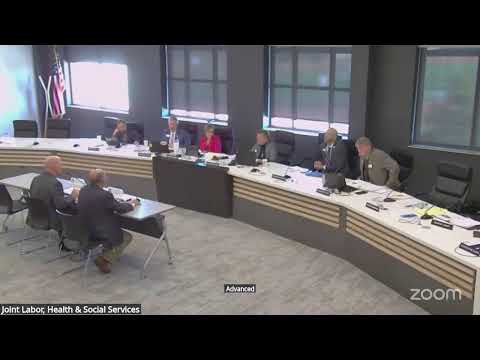
Kevin Bonlust, executive director of the Wyoming Board of Medicine, told the committee the Interstate Medical Licensure Compact dramatically increased license volume in recent years and accounted for roughly 63% of new physician licenses last year.
"Last year 63% of the licenses we issued were through the interstate compact," Bonlust said, and he presented year‑to‑year licensing counts that show overall physician licenses in Wyoming roughly doubled from about 3,773 to 7,690 after compact adoption. OBGYN licenses tripled from 89 in 2017 to 297 today, Bonlust said — but the share with Wyoming residential addresses rose much more slowly: only about 29% of those OBGYN licensees list a Wyoming address, meaning many are licensed in statute but not living or practicing in Wyoming.
What the board recommended: Bonlust emphasized that licensing alone is not sufficient; Wyoming must focus on retention and practice incentives, including graduate medical education and residency slots. He described ongoing policy work — including proposals to ease licensing for foreign‑trained physicians under supervised, limited licenses — and pointed to the potential value of physician assistant and APRN compacts in expanding capacity.
Why it matters: Committee members noted that licensing gains are a necessary but not sufficient step toward increasing on‑the‑ground obstetric care. The retention gap — more licensed OBGYNs than resident OBGYNs — suggests additional measures, from loan repayment or spousal‑employment supports to malpractice and call‑burden mitigation, may be needed to convert license counts into stable local coverage.
Follow up: Bonlust and board staff said they can provide more detailed residency, retention and reimbursement benchmarking; the committee asked for further information about whether fee structures or compact mechanics affect licensing revenue or board operations.