Get Full Government Meeting Transcripts, Videos, & Alerts Forever!
Get email alerts on the Local Government Actions topic
No spam. Unsubscribe anytime.
Williamstown town meeting backs environmental bans, bag rules and several CPC grants including Sand Springs sauna and skate‑park funding
Summary
Voters approved citizen petitions to ban second‑generation rodenticides and the land application of sewage sludge, tightened the town’s bag regulation, and approved multiple Community Preservation grants — including $20,000 for a Sand Springs sauna conversion and $350,000 for Purple Valley Trails’ skate‑park — while rejecting a move to shift legal notices to digital only.
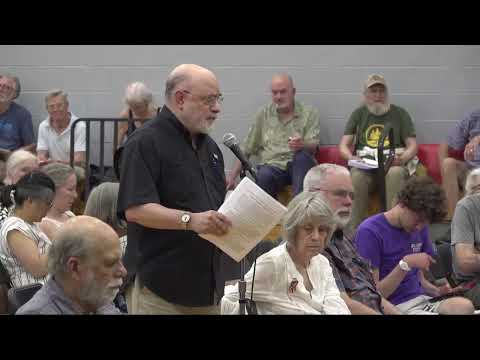
Williamstown’s annual town meeting decided multiple citizen petitions and Community Preservation Committee (CPC) recommendations that will change local regulation and fund recreation and preservation projects.
Environment and bylaws: A citizen petition to authorize a home‑rule petition banning second‑generation anticoagulant rodenticides on private property (Article 18) passed by electronic vote, 268–35. Presenter Leslie Gora summarized wildlife and public‑health concerns and noted other municipalities and pending state legislation on SGARs. A separate citizens’ petition (Article 19) to prohibit the land application of sewage sludge–derived materials (bio‑solids), advanced by Sharon Hayrick, won 235–57; Hayrick cited PFAS contamination risks and argued the bylaw is a precaution to protect soil, water and local food production.
Single‑use bags and notices: Susan Abrams’ proposed tightening of Williamstown’s existing 2015 bag bylaw (Article 20) — redefining reusable bags, applying the rule to all entities, restricting product bags and deemphasizing compostable plastics — passed 167–105. The select board had recommended against the article because it arrived late for review; proponents argued it closes loopholes and responds to health and waste concerns. Article 21, which would have allowed the select board to move legal notices to digital‑only posting, failed narrowly on electronic vote (123–126); speakers warned of access problems for residents who rely on print notices.
Community Preservation grants and recreation: The CPC presented a slate of grants (Articles 26–32). Article 27 authorized a $20,000 CPC grant to Sand Springs Pool & Recreation to convert a pump house into a 20‑person outdoor sauna to extend winter programming; the measure prompted debate about CPC scoring and equitable use of funds but passed by electronic vote, 190–48. Article 29 funded replacement of the town skate park with a poured‑concrete facility, awarding $350,000 to Purple Valley Trails after extended discussion and a two‑thirds vote to end debate; the article passed 131–77. Other CPC actions approved included $145,000 to the Williamstown Affordable Housing Trust (Article 28), $7,700 for pre‑construction work on an accessible trail at Margaret Lindley Park (Article 30), and a $25,000 agricultural preservation fund (Article 31) to enable timely responses to farmland sales and preservation opportunities.
Historic preservation and adjournment: Article 32 allocated funds for Images Cinema renovations and other historic preservation projects; town meeting approved the article and then adjourned.
Votes at a glance: Many routine warrant articles (Articles 2–15, 17, 22–25, 26, 28, 30–32) also passed by voice or clicker vote, including general fund and departmental appropriations, capital program transfers, and the property tax exemption adjustments in Article 22. Article 21 (digital notices) was the notable defeat among petitioner proposals.
What happens next: Select board and relevant committees will oversee implementation of bylaws and the CPC‑funded projects; the agricultural commission will hold funds intended for timely exercise of rights of first refusal. For the citizen petitions that require further state action (for example home‑rule petitions), the select board will be authorized to take the stated next steps.