Get Full Government Meeting Transcripts, Videos, & Alerts Forever!
Get email alerts on the School Budget topic
No spam. Unsubscribe anytime.
Williamstown approves $120,000 amendment to Mount Greylock budget to add elementary math interventionist
Summary
Town meeting approved a $120,000 amendment to the Mount Greylock Regional School District budget to fund a K–6 math interventionist at Williamstown Elementary School after an extended public debate about declining math scores, curriculum rollout, and long‑term costs. The amended district budget passed by majority vote.
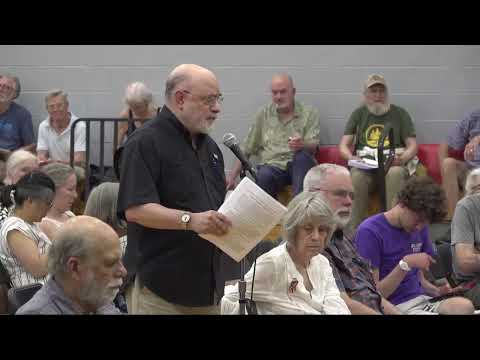
Elizabeth Goodman, moderator of the 2026 Williamstown annual town meeting, put Article 16 before voters: a proposed Mount Greylock Regional School District budget originally totaling $16,843,270. Parent Jenna Hosen moved an amendment to add $120,000 to fund a kindergarten‑through‑sixth‑grade math interventionist at Williamstown Elementary School (WES).
Hosen, who identified herself as a parent and a member of West School’s school council, told town meeting the proposal had unanimous support from the West Council and that local assessment data and teacher input drove the request. “The amendment asks the town to fund one kindergarten through sixth grade math interventionist position at West at the cost of $120,000,” she said, adding that “40% of our students are currently below grade level by at least one grade level” on locally cited I‑Ready assessments.
Speakers for the amendment emphasized early intervention, classroom benefit and the relatively small local cost per household. Deon Martell said the change would cost the median assessed household “10 cents a day,” and several parents and teachers described earlier local experience with a math specialist and the potential for rapid student gains.
Opponents urged patience with a recently adopted math curriculum and warned about recurring costs. School committee member and longtime volunteer Steve Miller, who said he serves on the school committee and the finance subcommittee, asked the town to consider fiscal trends and the difficulty of sustaining annual increases. School committee chair Julia Bowen described the budget presented by the committee as a “level‑service” budget developed after difficult tradeoffs and defended the committee’s unanimous vote on the package prior to the amendment.
Superintendent Joe Berson, who introduced the main motion for the district, framed the budget as “an exercise in navigating the tension between needs and wants for resources and the fiscal realities that constrain them.” After the amendment debate the meeting used the electronic clickers: the amendment passed, and the moderator then put the amended $16,963,270 budget to a voice and clicker count; it passed by majority vote.
The action: the town approved the $120,000 amendment and then approved the district budget as amended. The moderator explained that the amendment was isolated to the $120,000 and that further budget discussions would resume with the main motion. No roll‑call of members was taken; the meeting recorded the amendment’s passage by electronic vote and the final budget’s passage by majority voice vote. The superintendent thanked the community for its engagement and urged support for the approved budget.
Next steps: the budget will be implemented for the coming fiscal year; town finance and district officials will continue to monitor program results and budgetary impacts in future budget cycles.