Get Full Government Meeting Transcripts, Videos, & Alerts Forever!
Get email alerts on the District Finances topic
No spam. Unsubscribe anytime.
Finance committee: six‑month review finds district revenues and spending broadly stable
Summary
At a March 23 finance committee meeting, district finance staff reported that while revenues vary by source (tax, state, federal), overall six‑month revenue and expenditure levels are stable and within expected ranges; the auditor verified a $75.1 million year‑end fund balance.
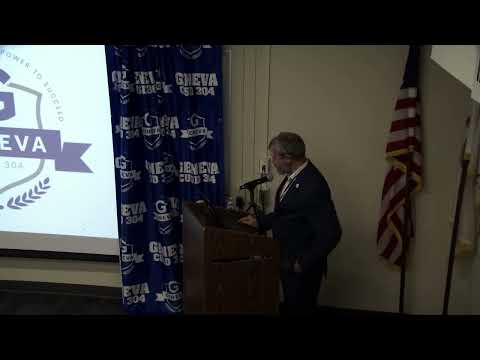
At its March 23, 2026 meeting, the Geneva CUSD 304 Board of Education Finance Committee heard a six‑month fiscal review from district finance staff who said overall revenue and expenditure levels remain broadly stable despite variability across funding sources.
The presenter told the committee that property‑tax and CPI shifts drive year‑to‑year changes in tax receipts and walked through six‑month year‑to‑date percentages across 2022–2025, noting some line‑item volatility (state reimbursements and federal grants) but steady total revenue near the high‑40 to low‑50 percent range at the six‑month mark. "I feel very comfortable in our budget and our transactions to date," the presenter said.
The presenter reviewed local revenue components — including participation and registration fees, parking, gate and athletic fees, and food service receipts — and said these local streams have rebounded toward pre‑pandemic patterns as activity and student participation returned. Todd, a district staff member, added that food service and participation fees are major contributors to local revenue.
State reimbursements and categorical payments, the presenter said, have declined in recent years and are less reliable than previously; conversely, federal receipts have been uneven because of one‑time grants and timing of claims (the presenter cited a large IDEA claim in January as an example). The presenter stressed that IDEA funds remain the district's largest federal grant and are used for special education services.
On expenditures, the presenter said salaries and benefits are predictable and track with work agreements and contract pay schedules, which explains why six‑month salary percentages may appear below 50 percent (summer accruals and pay timing affect the midyear snapshot). Purchase services, supplies and materials, and non‑capital equipment showed more year‑to‑year variance, with 2024 identified as a particularly high‑cost year when multiple capital projects and equipment replacements coincided.
The presenter reported that many capital projects scheduled for the current year were completed on time and that six‑month capital spending ran materially ahead of prior years. The presenter also displayed the district's funds view (education fund through Fund 90), explaining typical seasonal revenue and expenditure cycles.
The presenter said the auditor verified an ending fund balance of $75,121,948 at June 30 and reported cash reserves of $42,980,762; the presenter described the Miller ratio calculation (three‑year averaging of education, transportation and operations funds) used to assess reserve compliance and stated that the district's reported figures comply with statutory limits.
Committee members asked clarifying questions about local revenue composition, funds 70 and 80, and accounting timing; the presenter and Todd provided explanations on those points. No formal policy actions were taken on budget items at the meeting. The committee agreed it will continue monitoring state reimbursement trends and federal grant timing as those are material to near‑term revenue projections.
The committee closed the discussion by expressing general comfort with the district's current fiscal position and by accepting the auditor‑verified fund balances as reported.