Get Full Government Meeting Transcripts, Videos, & Alerts Forever!
Get email alerts on the Modernization topic
No spam. Unsubscribe anytime.
OPTN leaders and HHS oversight officials outline modernization plan, assure continuity during bridge period
Summary
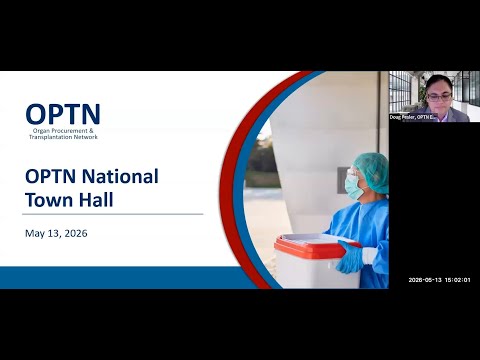
OPTN officers and Health Resources and Services Administration officials told a national town hall they are moving to a multi‑vendor model, working through a bridge period that began in late December 2025, and focusing on continuity of match runs and patient safety while contractors are onboarded.
At a national OPTN town hall, senior OPTN leaders and officials from the Health Resources and Services Administration said a multi‑year modernization effort remains on track and that core operations—patient registration, match runs and patient‑safety reviews—are continuing during the bridge period.
"Every policy we develop, every system we build, every decision we make ultimately needs to come back to that ensuring that patients receive timely, safe, and fair access to transplantation," said Dr. John McGee, OPTN president, who framed the initiative as patient‑centered and governance‑focused.
Dr. Raymond Lynch, acting director for the division of transplantation at the Health Resources and Services Administration, described the phased approach behind the modernization effort and the shift to a modular, contractor‑agnostic model. He said Congress’s Securing the U.S. OPTN Act of 2023 enabled increased appropriations and helped pave the way for HHS to expand in‑house oversight capabilities.
"We went into this bridge period," Lynch said, "and the legacy contractor continues to provide data and IT support, so patients are still getting added to the waitlist, match runs are still being executed, and transplants are still happening." He added that safety review groups such as the MPSC and DTAC continue to operate and receive needed administrative support.
Officials acknowledged uncertainty about exact procurement timelines but said announcements of awarded contractors will follow federal procurement rules and occur "as soon as we can," after which staged onboarding and committee re‑engagement will follow to reduce disruption.
Leaders emphasized outreach and transparency: they are rolling out OPTN 360, a new platform intended to improve coordination and provide dashboards for volunteers and the public, and plan continued national listening sessions and public comment opportunities as policy work advances.
The meeting closed with a reminder that unanswered questions and written responses will be posted on the OPTN website and that recording and materials will be shared with attendees.