Get Full Government Meeting Transcripts, Videos, & Alerts Forever!
Get email alerts on the Budget 2026 topic
No spam. Unsubscribe anytime.
Select Board hears contentious public comments as 2026 budget proposal rises $355,000
Summary
At a packed public hearing, town staff said proposed 2026 spending rises mainly because previously partially funded positions are now budgeted for full service, plus higher health insurance and a jump in dispatch and contract costs. Residents pressed for org‑charts, staffing counts and explanations for a perceived 12% tax increase.
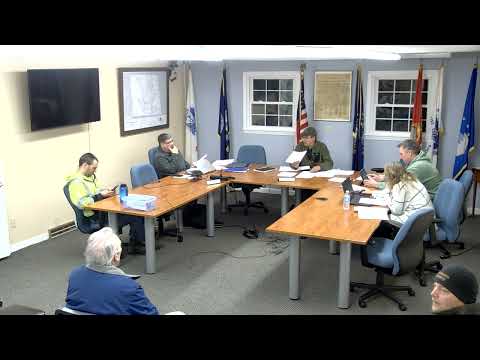
The New Ipswich Board of Selectmen opened a public hearing on the proposed 2026 municipal budget on Jan. 7, where officials and residents traded questions and explanations about staffing levels, insurance costs and why residents felt their tax bills had jumped disproportionately.
Town presenter Joe summarized the main budget drivers, saying the town "went up $355,000 in our 25 budget," a figure he used to explain year‑over‑year increases in wages, benefits and contract services. He told the board the largest increases were for wages (reflecting filled positions in fire, police and DPW), higher health insurance costs and an expanded dispatch contract.
The proposal assumes a 2.8 percent cost‑of‑living adjustment for hourly employees and budgets previously partially funded positions at higher, full‑year levels. Joe said some increases reflect positions that were only partly funded last year and will be budgeted as full‑year expenses for 2026.
Residents pressed the board to explain how that translated into individual tax bills. Brian, a resident who addressed the board, asked directly: "My question was why did our tax bills go up 12%?" Joe and other board members described a combination of factors — shifts in applied fund balances, school district impacts and variations in assessed values across properties — and urged residents to review the full tax‑rate packet that includes municipal and local education components.
Several speakers sought more granular workforce data. Becky requested a public org chart listing positions, whether positions are filled or vacant, and whether roles are full‑ or part‑time. Board members agreed staff would compile clearer position listings for the website and town report.
Police and public‑safety staffing and overtime were a recurring focus. Public commenters and selectmen discussed whether schedule management, comp time or position counts might reduce overtime. One attendee noted the town routinely budgets for positions that remain unfilled for parts of the year; that practice affects both the requested and default budgets and complicates public review of payroll lines.
Fire Chief Ben defended his department's request in detail, saying his job "as fire chief in this town is to figure out what the taxpayers need and try to present it in a budget" and that call volumes and service demands have risen. He said the department aimed for transparency by itemizing line items when meeting with the finance advisory committee.
Board staff acknowledged several clerical and technical adjustments that will be made before the deliberative session, including adding a small propane item for landfill operations and restoring a modest assessor training line. They also said they would rerun year‑end activity and encumbrances to present updated actuals ahead of the budget deliberation.
The board closed the public portion of the hearing after hours of discussion and agreed to post an updated draft, correct noted omissions and return with more detailed supporting materials at the deliberative session.