Get Full Government Meeting Transcripts, Videos, & Alerts Forever!
Get email alerts on the Food Access topic
No spam. Unsubscribe anytime.
WSU Cooperative Extension tells Spokane County transit barriers hamper getting groceries home
Summary
Evelyn Whitmer of Washington State University Cooperative Extension told commissioners that a small survey of EFNEP participants found significant transit-related barriers to getting groceries home — including high concern about running out of food and heavy bags limiting healthy purchases — and outlined partnership plans with Spokane Transit Authority and 2nd Harvest.
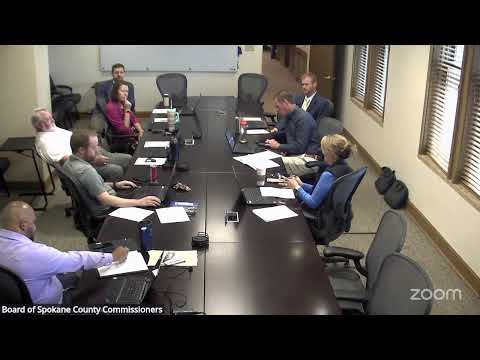
Evelyn Whitmer, an educator with Washington State University Cooperative Extension, briefed Spokane County commissioners on June 2 about EFNEP outreach and a student-conducted survey on food access and transportation barriers.
Whitmer said EFNEP is a federally funded nutrition-education program that also works on policy, systems and environmental approaches to improve food access. She described the survey the students ran with EFNEP class participants and said the first round included 30 respondents drawn from program participants recruited via community shelters and recovery houses.
Summarizing results, Whitmer said 90% of surveyed respondents worried they would run out of food before being able to buy more, roughly 93% relied on public transit or walking to obtain groceries (transcript numerical phrasing was "9393%"), 52% reported that the number or weight of bags they can carry on the bus was a burden, and 41% said they buy less healthy foods because of the weight and handling of fresh produce. She said respondents commonly travel about 3.5 miles for groceries and often walk a mile carrying purchases home from transit stops.
Whitmer emphasized partnerships to address the problems: she is coordinating with Spokane Transit Authority to clarify transit policies and rider limits, working with 2nd Harvest on distribution practices, and involving nursing students to gather additional data and community feedback. She described outreach and educational strategies EFNEP will pursue, including transit-focused materials and better SNAP/WIC literacy in the community.
Commissioners and attendees asked about mobile food distribution and post-pandemic funding; Whitmer said she did not have detailed distribution schedules (she pointed to 2nd Harvest for distribution specifics) and reiterated EFNEP’s immediate focus is improving the ability of recipients to get distributed food home.
Whitmer said her program will continue data collection and asked for county partnership on outreach and communication with transit operators; no formal action was taken during the briefing.