Get Full Government Meeting Transcripts, Videos, & Alerts Forever!
Get email alerts on the Land Use Moratorium topic
No spam. Unsubscribe anytime.
Spalding commissioners reject full residential moratorium but approve resolution to require board review of multi‑unit plats
Summary
After heated debate the board voted 1‑4 against a full moratorium on residential development, then approved a resolution (4‑1) removing the moratorium for single homes and instructing staff to bring preliminary and final plats for developments of two or more units to the Board of Commissioners.
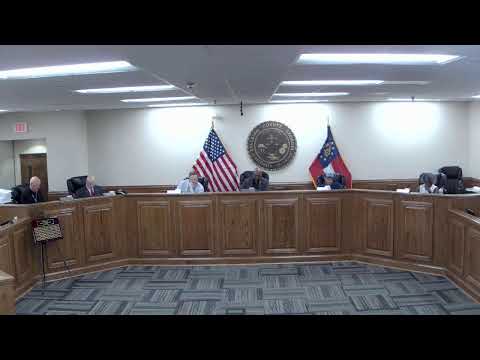
The Spalding County Board of Commissioners on June 1 rejected a motion to enact a full moratorium on residential development but approved a related resolution directing staff to present preliminary and final plats for developments of two or more dwelling units for board review.
Commissioner James Dutton moved to impose a full moratorium, arguing the board needed time to ensure developments followed county standards. “So my motion is for a moratorium,” he said during debate. Other commissioners objected that the earlier vote placing a moratorium on the agenda had not completed a second reading and that a full moratorium would prevent single homeowners from building.
One commissioner said the moratorium had been “hastily voted on” previously and that the board’s intent was to slow large developments, not stop single families from building. County Attorney Stephanie Windham advised the board that the moratorium had not been adopted as law (no second reading) and explained the legal mechanics of resolutions versus ordinances.
The motion for a full moratorium failed on a 1‑4 vote. The board then considered a draft resolution that removes the moratorium for single‑family projects and instructs staff to bring any preliminary and final plats for residential developments of two or more properties to the board for consideration. The board approved that resolution, also by a 4‑1 vote.
The approved resolution is intended as an interim measure; staff will continue ordinance review and return with long‑term language. The action means developers proposing small subdivisions or multiple new units will be routed to the board for review, while individual single‑family builds can proceed under the existing ordinance.