Get Full Government Meeting Transcripts, Videos, & Alerts Forever!
Get email alerts on the Health Research Funding topic
No spam. Unsubscribe anytime.
Evanston panel declines to advance city-funded clinical research for Pathways to Wellness
Summary
The Human Services Committee voted not to advance a proposal that would have added an intensive, city-funded clinical research component to the Pathways to Wellness program, after members and advisors debated whether limited ARPA funds should pay for research or direct services.
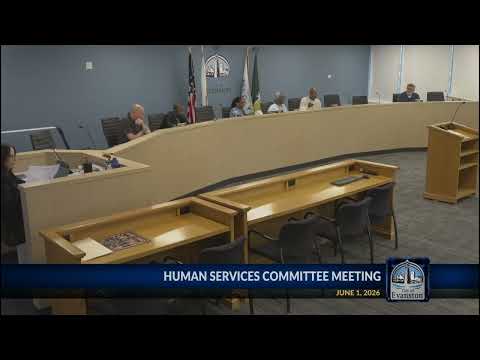
The Evanston Human Services Committee on June 1 declined to advance a request to fund clinical research tied to the Pathways to Wellness chronic-disease program, after members voiced sharply different views about whether city dollars should pay for evaluation or go directly to services.
Council member Burns, who sponsored the item, said the proposal aims to test a clinical medication-management model for hypertension that he described as distinct from lifestyle interventions and therefore in need of rigorous study. "We are trying to improve life expectancy in Evanston," Burns said, arguing the study would answer whether the clinical approach would work locally and justify future scale-up.
Council member Rogers said he supported more services for people with hypertension but opposed using municipal money to underwrite research. "I would rather see every dollar that we have going into delivering services to people as opposed to going into research," Rogers said, expressing concern that a small city for 75,000 people should not carry the financial burden of a large research project.
Dr. Lynch, the researcher associated with Rush who has worked with the Pathways team, told the committee the project’s budget had been substantially reduced from an earlier figure and now "comes in around $400,000," after cuts to indirect costs and some specialist staff. She said prior trials of blood-pressure interventions have often failed and that the specific clinical model proposed has not previously been tested in exactly this way in Evanston, which in her view justifies a local evaluation.
Representatives from the Evanston Health Advisory Committee (EHAC) and an EHAC-affiliated public-health practitioner said they support implementing the full intervention—screening, lifestyle support and medication referral—but urged caution about the city being the primary funder for large-scale clinical research. EHAC member Lynn Shahab, a physician, said EHAC "supports the program" but recommended that high-cost research is typically funded by external grants from CDC, NIH or foundations rather than by municipal dollars.
Pathways staff and a program representative on the record, Natisha Waldron, told the committee that components such as HIPAA-compliant data systems and housing patient data are expensive and already folded into the line items labeled as research; she said keeping a research path preserves eligibility for grant funding that could offset costs.
Committee members debated trade-offs at length. Burns and supporters said ARPA funds available to the city were an appropriate one-time source to test a model that could attract future external funding; opponents said the city should prioritize direct services now and pursue outside research funding later. After discussion the committee held a roll-call vote; Council Members Rogers, Ayles and Harris voted no and the item failed to advance for lack of support.
The committee’s recorded discussion made clear the split centers on whether the proposed evaluation is a necessary, city-funded clinical study or an activity that should be scaled back and paid for through outside grants. With the item failing to move, the Pathways team will need to decide whether to seek external grant funding, redesign the evaluation to a smaller impact evaluation, or pursue other program-only spending related to lifestyle and care coordination.