Get Full Government Meeting Transcripts, Videos, & Alerts Forever!
Get email alerts on the Molst Rollout topic
No spam. Unsubscribe anytime.
DPH advisory council advances MOLST 2 rollout, agrees to launch without two older guidance documents
Summary
The Department of Public Health advisory council reviewed the digital-first MOLST 2 form, training on CT Train and website resources; it agreed to launch without two older guidance documents pending rewrites and asked DPH attorneys to clarify rules on electronic signatures and conservator authority.
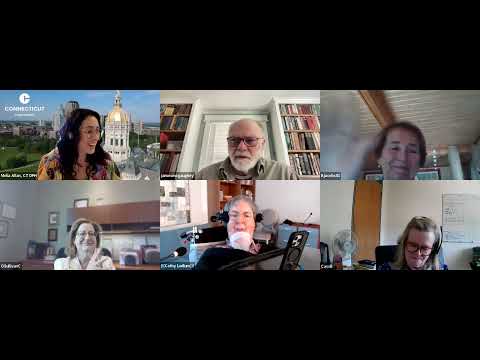
Barbara Cass, senior adviser to the commissioner for long-term care at the Department of Public Health, opened the advisory council meeting and asked staff to present a progress update on MOLST 2, the department's updated Medical Orders for Life‑Sustaining Treatment form and training package.
Melia, the project lead, told the council the MOLST form has been iteratively edited and is available both as a printable form and a fillable PDF. "Both forms are identical," Melia said, explaining the dual option is intended to reduce provider confusion. She said policies and procedures for the update have received formal Attorney General approval and are now with the governor's office for final sign-off.
The presentation focused on training logistics and the website. Melia said the new provider training was built using Articulate Storyline and will be uploaded to CT Train with new course IDs for both the MOLST program and the EMS training. "If you were to straight through watch the whole thing, it takes about 40 minutes," Melia said, adding the quiz takes roughly five minutes and that the passing score is 100 percent; learners may retake the quiz.
Council members discussed distribution and tracking. Barbara Cass said facility licensing and practitioner licensing channels will be used for outreach and that separate launches will be coordinated for the EMS advisory council and EMS medical advisory board to ensure awareness among EMS organizations.
The council reviewed two older resource documents: a 15‑year‑old "conversation guidance" and a separate guidance for underserved populations. Members generally agreed the conversation guidance is outdated and recommended removing it from the initial launch. Several members supported retaining and rewriting the underserved-populations guidance, but only after careful review by subject-matter experts. Melia said the department will launch MOLST 2 without the two documents and will convene advisory subgroups to revise or replace them for later inclusion.
Doctor Shapiro raised whether the department will accept electronic signatures on the MOLST form now that the program is moving away from the old green paper. The council noted that statutes govern who may sign MOLST documents and that DPH attorneys will be asked to clarify whether electronic signatures are legally acceptable. The group also clarified that, under current statute, conservators are not automatically authorized to sign MOLST forms unless the patient has specifically designated the conservator as the health care representative.
The council confirmed quorum and approved the May 8 meeting minutes after a motion from Rich Kamen and a second; the chair recorded 'aye' votes with no nays or abstentions noted. The meeting closed with members congratulating Melia on her work and noting a planned handoff to her successor.
What happens next: DPH will seek final executive approval for policies and procedures, upload the training and forms to CT Train and the department website, and proceed with a launch that omits the two older documents pending advisory‑led rewrites. DPH attorneys will be asked to clarify rules on electronic signatures and on who is authorized to sign MOLST forms.