Get Full Government Meeting Transcripts, Videos, & Alerts Forever!
Get email alerts on the Data Centers topic
No spam. Unsubscribe anytime.
Residents press York County for 9‑month moratorium on new data centers, planning committee supports pause
Summary
Following months of public concern, residents urged York County Council to adopt a nine‑month moratorium on new hyperscale data centers so staff and the planning commission can study land use, noise, water and emergency‑response impacts; Planning & Zoning recommended a moratorium be forwarded for first reading.
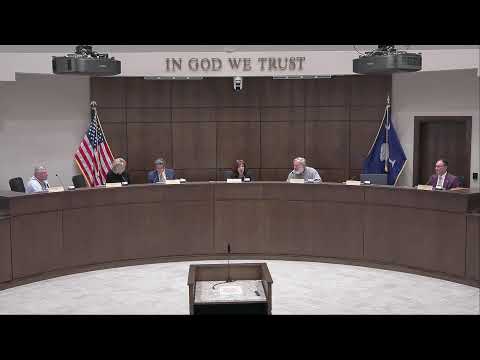
Dozens of residents urged York County leaders on June 1 to pause approvals of new data center projects until the county can study their local effects and shore up zoning protections.
Speakers at the public forum — neighbors, technology professionals and community activists — described a range of concerns: lack of transparency in prior land sales and approvals, heavy electricity and water usage that could affect community resources and rates, tall buildings and cleared buffers that change rural character, nighttime noise and unanswered questions about emergency response and hazardous‑materials planning. Several callers urged the council to adopt a nine‑month moratorium to allow staff and the planning commission time to craft stronger rules.
Key voices included Chris DeFilippo, who said a hyperscale AI‑driven data center had been treated "like a routine industrial project," and Chris Thompson, who alleged county‑owned land was sold with insufficient disclosure and later developed as a large QTS data center expansion. Technology professional Deborah Zeowski pointed to commonly used mitigation measures in other jurisdictions, including night noise standards and locating large facilities in heavy industrial zones with buffer areas.
Planning & Zoning Chair Debbie Clowninger told council the committee recommended moving a council‑initiated moratorium to first reading and then back to planning commission for further work. Council members discussed the path forward: a first‑reading referral by title only followed by technical review, white papers and, as staff suggested, a workshop and committee process as part of the county's broader "project decode" effort.
What remains unresolved: Speakers alleged a lack of disclosure around the original county land sale and raised claims about specific pollutant releases and evacuation risks; those claims were not adjudicated during the meeting and remain contested or unresolved pending county review. Council did not adopt the moratorium at the June 1 session but did receive the Planning & Zoning Committee recommendation to advance the topic for formal consideration.
Quote: Chris DeFilippo said, "This is not a community problem. And this is a governance and planning problem," urging broader review of zoning and incentives.
Ending: Council directed staff to prepare materials for referral and to schedule additional committee and workshop sessions so planning staff, the planning commission and council can weigh ordinance changes and state‑level dependencies before any moratorium (or ordinance changes) is enacted.