Get Full Government Meeting Transcripts, Videos, & Alerts Forever!
Get email alerts on the Budget topic
No spam. Unsubscribe anytime.
York County adopts FY27 budget after amendments aimed at lowering millage
Summary
York County Council approved the FY27 operating and capital budget on a 4–2 vote after adopting a multi‑part amendment that trims contingency and one‑time spending, reclassifies several positions and aims to reduce the general fund millage by about one mill.
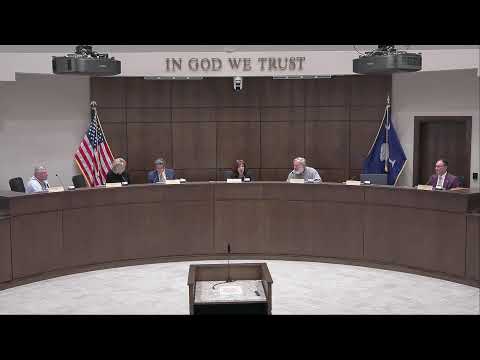
York County Council approved its fiscal year 2027 operating and capital budgets on June 1, adopting a package of amendments the chair said could lower the general fund millage by about one mill.
The council's third‑reading vote, taken after several hours of public comment and internal debate, passed 4–2. The chair introduced an omnibus amendment that proposed line‑item cuts (including contingency funds and one‑time projects), elimination of certain salary contingencies, and a set of position reclassifications intended to secure a chief financial officer/treasurer role while preserving other staff positions.
Why this matters: Council members and residents framed the budget decision as a balance between short‑term tax relief and long‑term operational risk. Supporters said the changes reduce taxes using available fund balance and one‑time savings; critics warned that some cuts remove contingency buffers and could force higher costs later.
The amendment package included: reducing or eliminating multiple contingency and one‑time accounts; cutting discretionary operating items such as an outside community survey and select IT phone services; reclassifying a former assistant county manager/treasurer assistant role into a stand‑alone CFO/treasurer position; and authorizing county management to move certain rural fire‑related one‑time expenses into fund balance while allowing special fire tax districts (for example, Flint Hill) to fund immediate hires through their own special revenues.
The chair summarized the effort as an attempt to "get us to at least a one mil reduction" in the general fund millage. County Manager Josh Edwards and Assistant County Manager David Garner answered detailed questions from council about how reclassifications would operate and whether emergency management could absorb certain EMS reporting responsibilities without a new dedicated hire.
Opponents on the council said the omnibus approach insufficiently documented which services would be cut and cautioned against relying on one‑time savings and contingency reductions to justify permanent tax changes. Several members also raised concerns about using the Economic Development (ED) fund to pay for an ombudsman role rather than a general‑fund appropriation.
Key outcomes: The chair's omnibus amendment passed by voice vote and was recorded as 4 in favor, 2 opposed; a later motion to restore a third assistant county manager was subsequently approved. The final motion to adopt the FY27 budget and levy taxes passed 4–2.
What comes next: Staff said line‑item adjustments and reclassifications will be implemented by county management and finance staff; council members asked for workshops and further detail on multi‑year staffing and infrastructure plans, particularly for utilities and long‑term fire staffing. The council also signaled plans to bring additional supporting analyses to the Joint Public Safety (JPS) committee and to schedule follow‑up workshops on utility studies and capital improvement priorities.
Quote: The council chair, explaining the package, said the proposal "would allow a full mill reduction to the taxes." Josh Edwards, the county manager, said the priority is to secure a CFO position and that staff would work with council to refine long‑term plans.
Ending: With the budget adopted, staff and council members said they will follow up with more detailed briefings on the implementation steps, utility studies and the planned JPS discussions on fire staffing and financing.