Get Full Government Meeting Transcripts, Videos, & Alerts Forever!
Get email alerts on the Human Services topic
No spam. Unsubscribe anytime.
Kandiyohi County hears sweeping human-services legislative update; SNAP error-rate funding shortfall leaves potential county cost exposure
Summary
County staff outlined 2026 legislative outcomes: a human-services modernization fund ($75M year 1, $15M year 2), $10.728M in SNAP administrative support to counties, and $15M one-time child-protection funding. A proposed benefit-cost-share to cover SNAP error-rate liabilities did not pass, and staff warned counties may face costs pushed to the tax levy in late 2027. Officials also flagged a CMS-driven provider revalidation (Minnesota Revalidate 2026) that has led to many disenrollments and appeals.
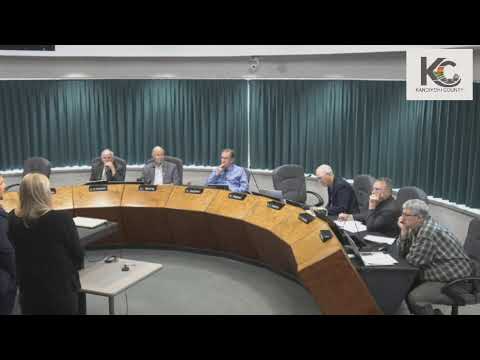
Kandiyohi County officials spent the bulk of their June 2 meeting on a legislative briefing that county staff said will affect budgets and service delivery next year.
County Administrator Kelsey Baker and Caroline Khan, director of Kandiyohi County Health & Human Services, highlighted several outcomes from the 2026 legislative session and what they expect in 2027. "We were successful in that the legislature passed an HS modernization fund in the tune of $75 million in this first year and $15 million in the second," Khan said, adding that the package includes roughly $10 million targeted to county IST system updates.
Khan also said the legislature provided $10.728 million to counties to offset SNAP administrative costs after recent federal changes reduced federal reimbursement. "This is to help offset that administrative portion... we are anticipating some support there," she said. However, Khan said a separate proposal to cover county exposure to SNAP benefit error-rate liabilities (the benefit-cost-share) did not pass. As a result, county staff told commissioners they should expect some fiscal pressure to appear in the 2027 levy as error-rate costs are assessed, likely in late 2027, though the timing and cadence remain uncertain.
Commissioners and Khan discussed how SNAP error rates are calculated and how small sample overpayments can produce disproportionately large percentage figures in county statistics. "We have a historical error rate of 0% here in Kandiyohi County for many years," Khan said, noting that even small-dollar overpayments can skew percent calculations in small samples.
The briefing also covered Medicaid and long-term services: staff said counties won support for technology modernization and federal-conformity changes intended to streamline eligibility, and the legislature provided $15 million one-time funding for child-protection staffing and services with a floor allocation for each county. Khan said the law clarified scope limits for eligibility and that federal-state conformity should ease administrative burdens.
Melissa Helguson, a home-and-community-based services supervisor, warned about Minnesota Revalidate 2026, a CMS-directed off-cycle provider revalidation. "Providers who have received a disenrollment notification can appeal and can continue to provide services during the appeal but they cannot bill," Helguson said, noting she has received calls from local providers who were affected. County staff said more than 1,000 providers statewide were impacted and that affected providers should appeal to preserve time to submit corrective documentation.
Khan closed by noting a workforce change: counties must stop using the title "social worker" for positions that do not require a license; job titles should be changed by July 1 to labels such as "case manager" or "specialist."
County staff said they will continue working with the Association of Minnesota Counties and legislative teams to clarify funding flow and to advocate for county fiscal protections in the coming session.