Get Full Government Meeting Transcripts, Videos, & Alerts Forever!
Get email alerts on the Credit Reporting Reform topic
No spam. Unsubscribe anytime.
House Financial Services subcommittee hears sharp industry-consumer advocate divide on credit reporting reforms
Summary
Industry witnesses told the House Financial Services subcommittee that uncapped FCRA liability and fraudulent disputes harm credit reporting and deter new data furnishers, while consumer advocates warned proposed bills would gut accountability and harm consumers; members pressed over medical debt, alternative data and CFPB oversight.
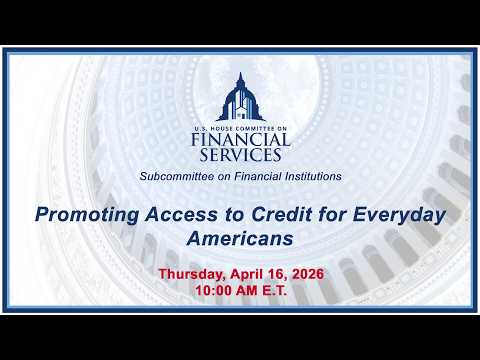
The House Financial Services Subcommittee held a full hearing on credit reporting and a slate of bills aimed at changing how consumer data is used, who bears liability for errors, and how the Consumer Financial Protection Bureau (CFPB) monitors complaints.
Industry witnesses said the Fair Credit Reporting Act underpins access to credit but argued its current civil liability framework fuels litigation and discourages new data furnishers from participating. "FCRA's current liability rules have fueled lawsuits, burdening businesses with high costs, while delivering little consumer benefit," said Dan Smith, president and CEO of the Consumer Data Industry Association, in his opening testimony.
Consumer advocates and legal aid groups pushed back. Chi Chi Wu, director of Consumer Reporting and Data Advocacy at the National Consumer Law Center, said the bills before the panel "benefit the big three credit bureaus" and would reduce remedies for people harmed by reporting errors. Wu cited individual cases in which inaccurate reporting caused job loss, homelessness and other severe hardship.
Why it mattered: Members and witnesses framed the debate as a tradeoff between two goals that can conflict in practice — wider access to credit through new data sources, and preserving mechanisms that let harmed consumers obtain meaningful redress. Several lawmakers asked whether proposals such as the FCRA Liability Harmonization Act (H.R. 5775) would lower litigation costs and spur entrants (rental, utility and telecom furnishers) to share data, thereby improving coverage for "credit invisible" Americans.
Points of contention
Liability and litigation: Industry witnesses argued that uncapped statutory and punitive damages in FCRA class actions create incentives for protracted litigation rather than prompt dispute resolution. "The FCRA Liability Harmonization Act offers targeted reforms that strongly protects consumers by focusing on real harm," Dan Smith told the panel. Rebecca Keen, a partner at Hudson Cook, described the FCRA as a "self-correcting ecosystem" but said liability provisions have diverged from other federal consumer statutes.
Consumer harms and accountability: Consumer advocates warned that narrowing remedies would deny people full accountability for severe errors. Chi Chi Wu cited examples of consumers who faced life-changing harms after incorrect reporting, and said privately filed litigation often remains the main check when the CFPB is sidelined.
Alternative data and rent reporting: Members repeatedly asked about including rental and utility payments in credit files. Industry witnesses said ‘‘additional data’’ can bring previously invisible consumers into the system and help lenders underwrite more accurately. Consumer advocates urged caution: Chi Chi Wu and other witnesses said rent and utility reporting should be positive-only and voluntary, warning negative reporting could jeopardize housing for struggling renters. Members also raised that public housing authorities would need funding to compile and submit rent data accurately.
CFPB role and complaint database: Committee members questioned whether social-media-driven or AI-generated complaint campaigns are overwhelming the CFPB portal and whether legislative changes (H.R. 7588) or attestation requirements would reduce fraud. Industry witnesses supported measures to curb what they described as "credit washing" and mass fraudulent disputes. Consumer advocates said the CFPB previously returned billions to consumers and warned that sidelining the agency reduces consumer relief.
Exchanges and notable quotes
-Dan Smith (CDIA): "The FCRA Liability Harmonization Act offers targeted reforms that strongly protects consumers by focusing on real harm."
-Chi Chi Wu (National Consumer Law Center): "We oppose each of the bills posted today, which all benefit the big three credit bureaus" and would "drastically reduce accountability for credit reporting violations."
-Celia Winslow (AFSA): warned that "credit washing" and false identity claims are increasing and that artificially inflating scores "distorts the system, making it less reliable."
What the committee did not do: There were no committee votes or formal actions recorded in the hearing. Members entered materials into the record and asked witnesses to provide written responses to submitted questions by May 21, 2026.
Next steps: Committee members signaled sharply different preferences about legislative fixes — some urged harmonizing FCRA liability to encourage new data and competition, others pressed for stronger consumer safeguards and for restoring robust CFPB enforcement. The hearing record will include witness statements and submitted materials; members have five legislative days to add additional material to the record.
Ending: The hearing concluded after unanimous-consent submissions were entered into the record and the chair adjourned the subcommittee.