Get Full Government Meeting Transcripts, Videos, & Alerts Forever!
Get email alerts on the Early Childhood Funding topic
No spam. Unsubscribe anytime.
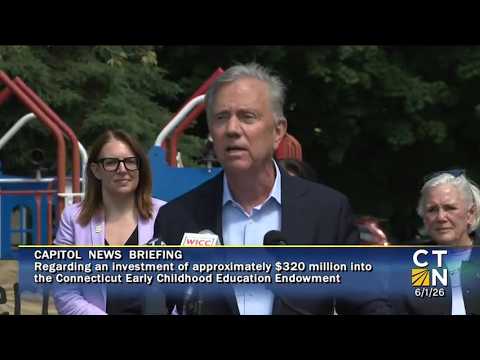
Connecticut leaders tout $600M-plus early childhood endowment, outline plan to expand affordable care and raise pay
Summary
State officials, providers and parents gathered at Honey Bear Learning Center in Stratford to mark a second deposit into Connecticut’s early childhood endowment, describing program dollars for provider pay raises, scholarships, facility renovations and a planned rollout of reduced- and no-cost child-care slots beginning in fiscal 2028.
Connecticut officials and local partners gathered at Honey Bear Learning Center in Stratford to celebrate the second deposit into a statewide early childhood endowment and to outline how the funds will expand subsidized child care, increase provider pay and support workforce development.
The endowment, which officials said received a $300 million deposit last year and an additional approximately $300–$320 million this year, is structured so a portion of returns can be used each year. "If we estimate around a 300 to $320 million deposit for year two, that will net around $70 million that can be spent," said Elena Trworthy, commissioner of the Office of Early Childhood. Trworthy said fiscal rules permit using roughly 12% of the endowment in fiscal 2027 and require $10 million of that to support a health-care subsidy for the early childhood workforce.
Why it matters: Speakers framed the endowment as a long-term commitment to stabilize Connecticut’s child-care system and keep parents in the workforce. Governor Ned Lamont said the fund is designed "to be a promise that we will keep," arguing an endowment preserves funding through economic downturns while allowing recurring investments in compensation and access.
What officials said they have already delivered: Trworthy and other officials listed early outcomes from year one of the initiative — $10 million in program operations grants to support providers, more than $1 million in scholarships that doubled the number of students supported on career pathways, and an 8% increase in provider payment rates intended to boost wages.
Local impact and testimonials: Kathy Vaniki, owner and director of Honey Bear Learning Center, described the center’s history and said the program has allowed Honey Bear to earmark 100% of its Early Start funding increases for teacher wage increases and to participate in OEC-supported tuition assistance for staff pursuing early-childhood degrees. Parent Katie McN said the program "makes a difference for Connecticut families like mine," allowing both parents to remain in the workforce. Teacher Jen Cortez said, "fair and stable compensation means that we can attract and keep passionate and talented teachers."
Facility and access investments: Officials noted the bond commission approved $16.5 million for child-care facility renovation and expansion and more than $10 million for an IT project to build a single-entry portal so families can find affordable care. Trworthy said the state currently serves about 19,000 children through Early Start Connecticut and officials hope to expand capacity beyond that number.
Implementation and eligibility timeline: In response to media questions, officials said reduced-price and free child-care slots are planned to begin July 1, 2027 (implementation in fiscal 2028). Trworthy outlined eligibility as free for families making $100,000 or less and capped at up to 7% of income for higher earners; she said the initial rollout will prioritize families already enrolled in Early Start Connecticut, with plans to broaden access.
What’s next: Officials and lawmakers urged continued legislative support for future deposits and implementation work. Several local leaders highlighted the endowment’s potential to boost economic participation by making child care more affordable and by stabilizing the early-childhood workforce.
The event closed with officials inviting media questions and reiterating that further program details — including updated capacity estimates, enrollment rules and implementation milestones — would be released as the Office of Early Childhood finalizes FY28 plans.