Get Full Government Meeting Transcripts, Videos, & Alerts Forever!
Get email alerts on the Streets topic
No spam. Unsubscribe anytime.
Council presses staff to use highway and enforcement reserves to fix streets, calls $100,000 allocation insufficient
Summary
During a FY27 budget review, councilmembers said the recurring $100,000 appropriation for street repairs falls short of needs and urged staff to identify revenue—including highway-use and automated enforcement funds—to pay for resurfacing and speed-bump projects.
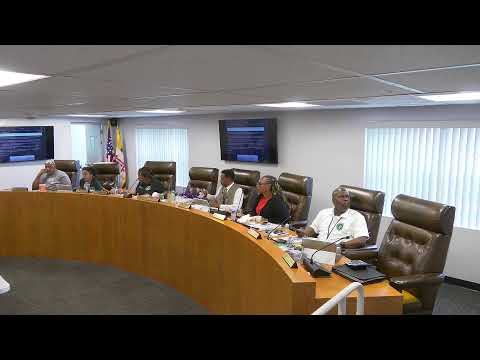
Seat Pleasant ' The City Council intensified scrutiny of the public works budget on April 23, saying the $100,000 line for street repairs is inadequate to address recurring potholes and resurfacing needs.
Councilwoman Jones said the ongoing patch work is unsustainable: "It is not enough. The residents want their streets fixed. It is not enough," she said, urging a one-time larger investment to reduce repetitive fixes.
The council discussed several options staff could pursue to free money for road work. Councilwoman McCarty noted the city's highway-use reserve, citing "almost 400,000 actually almost 500,000" in that account and asked staff to explore placing those funds as expenditures for street repairs if the uses meet state justification requirements. Ms. Logan said highway-user receipts currently appear under revenues and would need to be explicitly budgeted as an expenditure with documentation aligning to state rules.
Members also asked whether automated enforcement and other targeted revenue streams could supplement paving and speed-bump projects. Staff responded some automated enforcement and recruitment/retention funds have been used to backfill near-term needs but warned those sources are limited and that drawing them down requires accounting changes and long-term planning.
Council members pressed staff for clearer line-item mapping between capital outlay and operating accounts, noting purchases (for example, buying a Bobcat) would be capital outlay and could trigger debt-service treatment, while rental and contractor-paid resurfacing belong to operating lines.
The council directed staff to bring back: corrected salary figures that affect cola/merit calculations; an explicit inventory of reserve balances (highway-use and automated enforcement); and proposals showing how much additional pavement could be funded in FY27 under different revenue scenarios. The council scheduled follow-up budget review for April 27.