Get Full Government Meeting Transcripts, Videos, & Alerts Forever!
Get email alerts on the School Policy topic
No spam. Unsubscribe anytime.
Racine board weighs ‘bell‑to‑bell’ phone ban, leans toward middle‑school pilot ahead of business‑meeting vote
Summary
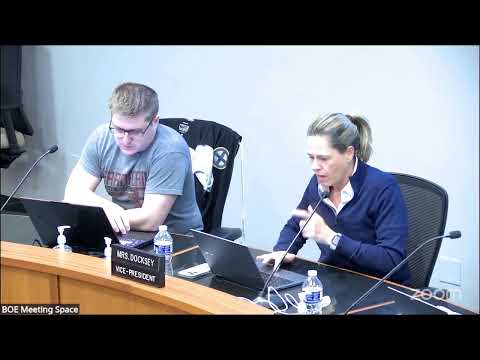
At a June 3 work session, the Racine Unified School District board debated whether to tighten its cell‑phone policy — weighing a districtwide 'bell‑to‑bell' ban against a narrower classroom‑only rule and a phased rollout. Administration will present drafted policy options and implementation templates at the next business meeting.
The Racine Unified School District board spent most of its June 3 work session debating whether to expand its existing instructional‑time rule into a districtwide "bell‑to‑bell" cell‑phone ban, and asked administration to bring sample policies and implementation options to the upcoming business meeting for a formal vote.
Administration outlined two main paths: stick with the state‑minimum approach that allows students to carry phones but forbids use during class, or adopt a bell‑to‑bell ban that would make phones inaccessible throughout the school day. The superintendent’s staff described the tradeoffs and estimated hard costs — roughly $30 per Faraday/Yondr pouch and about $155 per classroom locker — and warned of significant soft costs, including staff time for daily collection and release, parent outreach and disciplinary workload.
Board members split on enforcement and timing. Several members argued that classroom‑only enforcement leaves inconsistent implementation across buildings and that putting phones completely out of students’ hands is the only reliable way to remove the distraction. "Bell to bell to me is the only answer," one board member said, urging a strict approach for middle and high schools. Others urged a staged rollout — starting in middle schools with a one‑year review — citing operational strain, medical and IEP exceptions and the risk of a short‑term uptick in suspensions.
Staff presented budgetary examples for planning: using pouches for 3,500 middle‑school students would cost on the order of $100,000 for the devices alone, while installing lockers at scale could run into the low millions. Staff also noted observed high replacement or damage rates for pouch systems in some districts and recommended that any implementation plan include training, monitoring and a set timeframe for review.
Equity and community engagement were central to the discussion. Several trustees said the district must plan for how disciplinary consequences would affect Black and Brown students, who already receive a disproportionate share of suspensions, and asked for an aggressive communications and outreach campaign (surveys, listening sessions and door‑to‑door engagement) so parents and staff understand the rationale and timeline.
No motion was taken at the work session. The board directed administration to prepare sample board‑policy language, administrative regulations and several rollout scenarios (districtwide bell‑to‑bell, instructional‑time‑only with stronger enforcement, or a phased pilot starting at middle schools) so trustees can take a formal vote at the next business meeting.