Get Full Government Meeting Transcripts, Videos, & Alerts Forever!
Get email alerts on the Environment Offshore Wind topic
No spam. Unsubscribe anytime.
Aurora residents urge caution over Lake Erie turbines; supporters say concerns may be overstated
Summary
Multiple residents at the Nov. 25 Town of Aurora meeting urged the board to take a position on proposed industrial wind turbines in Lake Erie. Opponents cited potential disturbance of sediments and heavy‑metal toxins and impacts to recreational fishing; supporters and at least one speaker cited state NERTA studies and urged careful review before opposing green energy.
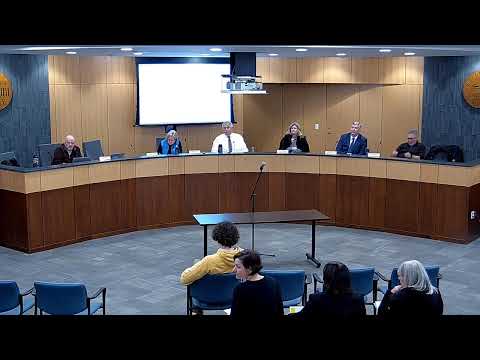
Residents used the meeting’s audience comment period on Nov. 25 to press the town on proposed industrial wind turbines sited offshore in Lake Erie, laying out conflicting public concerns about water quality, navigation and regional energy policy.
Evan Rhoden, who said he lives on Grover Drive, urged caution about “knee‑jerk” opposition and said many residents support renewable energy when plans are real and well studied. "Most people are in support of the wind turbines... and we want to make a better world for the kids that are coming tomorrow," he said, arguing that some environmental objections historically raised against local projects have not materialized.
Other speakers pushed the town to act proactively. Patty Mechas (identifying herself with Citizens Against Wind Turbines in Lake Erie) told the board she was asking the town to adopt a resolution aligning with other Erie County towns and villages, citing concerns that turbine installation could disturb lake‑bed sediments and release heavy‑metal toxins. "These heavy metal toxins are a real thing," she said, and requested that the town seek peer‑reviewed studies before supporting turbine siting.
Nicole Duffin said contaminants such as PCBs and PFAS exist in lake sediments and questioned potential impacts from seabed disturbance. Several fishermen and boaters noted proposed turbine exclusion zones and said large industrial turbines could limit recreational access offshore.
Board members and other residents referenced state NERTA (New York State Energy Research and Development Authority) studies and a statewide process; one attendee said NERTA reports had reassured them the state was studying potential obstacles. Speakers on both sides asked the town to coordinate with neighboring municipalities and Erie County, where similar resolutions had been considered.
What the board heard and will do: the meeting recorded a vigorous public exchange but no formal town action on turbines. Several commenters asked the board to consider a resolution; others warned that adopting an undifferentiated anti‑turbine stance without a specific project could be perceived as anti‑green energy. The board received printed materials and requests to circulate supporting studies; staff and board members said they would expect follow‑up correspondence and that any formal resolution would be considered at a future meeting.