Get Full Government Meeting Transcripts, Videos, & Alerts Forever!
Get email alerts on the Housing Eviction topic
No spam. Unsubscribe anytime.
Topeka City highlights eviction‑defense partnership with Kansas Legal Services and free help for renters
Summary
Topeka City’s Housing Services and Kansas Legal Services described a third‑year eviction‑defense partnership that offers free legal advice and expanded representation for qualifying renters, with guidance on documentation, where to apply, and common misconceptions about rent and lease terms.
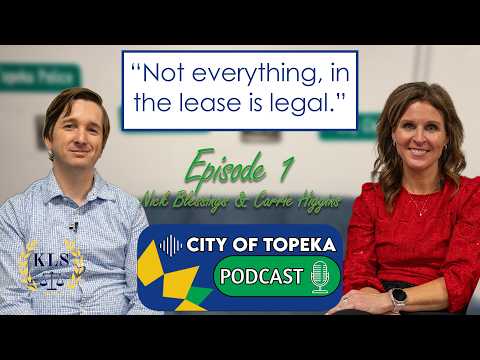
Topeka City’s Housing Services and Kansas Legal Services are in their third year of a partnership that offers eviction‑defense help to qualifying renters, city officials and program lawyers said on a recent City of Topeka podcast.
"Yes. So, we launched an eviction defense program. We are—we just started our third year in partnership with Kansas Legal Services," said Carrie Higgins, director of Housing Services for Topeka City, describing the program that lets tenants apply for legal assistance if they believe their rights have been violated.
Why it matters: Tenants facing maintenance problems, lease disputes or eviction notices often lack resources and legal knowledge. Kansas Legal Services provides legal advice to most callers and has increased the number of cases where it offers full or limited‑scope representation, including serving as counsel in eviction court when appropriate, said Nick Blessing of Kansas Legal Services. "Definitely a major issue is maintenance," Blessing said, noting many properties are older and repairs can be slow or unaddressed.
Program details and how it works: Residents can apply to Kansas Legal Services through the organization’s central intake online or by phone; Housing Services also refers residents to KLS when rights may have been violated. The podcast reiterated that the program is available to qualifying Topeka City residents at no cost through the partnership. City staff recommended tenants document maintenance requests in writing, take photographs of problems and keep copies of leases and communications in case a dispute proceeds to court.
A representative example: Blessing described a case in which KLS negotiated extra time for a tenant to move, no further rent obligation, and a $1,500 payment from the landlord after significant deficiencies in the unit were documented.
Common misconceptions: The guests emphasized several practical points frequently misunderstood by renters. Tenants generally should continue paying rent while pursuing repairs through legal channels; stopping payment can lead to prompt eviction action and an unfavorable court outcome. The panel also said the eviction‑defense partnership can cover legal costs for qualifying clients and clarified that Kansas Legal Services handles a range of civil legal matters statewide, though its partnership with Topeka City focuses on landlord‑tenant issues. Speakers noted some lease provisions may be unenforceable under the Kansas Residential Landlord and Tenant Act—attorney‑fee clauses are a frequently cited example.
Contacts and next steps: To apply, residents should contact Kansas Legal Services’ central intake (kansaslegalservices.org) or the Topeka Housing Services Division at 785‑368‑3711 or via Topeka City’s website (topeka.org). Program staff encouraged residents to reach out early and said many issues are resolved through advice or limited representation before court is necessary.
The podcast hosts closed by reminding listeners the episode and future installments are available on the Topeka City YouTube channel and standard podcast platforms.