Get Full Government Meeting Transcripts, Videos, & Alerts Forever!
Get email alerts on the Homelessness topic
No spam. Unsubscribe anytime.
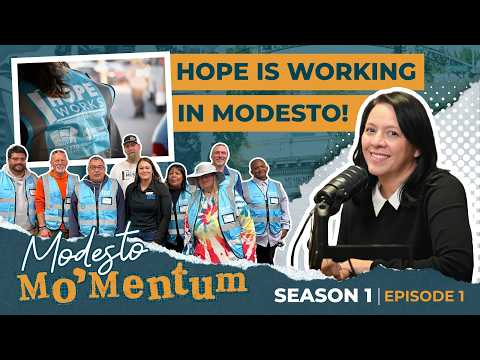
Modesto City launches HopeWorks, a paid transitional jobs program replacing Downtown Streets Team
Summary
Modesto City and partners launched HopeWorks to replace Downtown Streets Team after its October 2025 closure. The program offers 68 paid transitional jobs, partner-run case management and a path toward housing; the City Council approved the arrangement unanimously on Oct. 14, 2025.
Modesto City officials and nonprofit partners said HopeWorks, a new transitional employment program, will continue community cleanup, job training and pathways to housing after Downtown Streets Team announced it would close on Oct. 31, 2025.
"Es un camino hacia la autosuficiencia para personas que buscan reconstruir su vida y salir de la situación de calle," said Sonya Severo, Modesto City’s public relations manager, framing HopeWorks as part of the city’s Camp 2 Home effort to reduce homelessness. (Original Spanish quote.)
City staff described HopeWorks as a departure from the volunteer-based Downtown Streets Team model: participants now receive paid, transitional employment rather than stipends or volunteer credit. Edgar Garcia, Modesto City’s community development manager, said the program maintains the previous team size with 68 participant slots and pays participants for community-cleanup work.
Jason Conway of Modesto Gospel Mission outlined the program’s shelter and service capacity and how HopeWorks fits into that network. "We are an emergency shelter campus offering about 180 beds for men, 100 or more for women, and in total roughly 450 people under our roof some nights," he said. Conway described HopeWorks as complementing shelter services with paid work and case management.
United Way of Stanislaus County is the other principal partner. "We are our own 501(c)(3) and we focus on connecting the points," said Keristofer Seryani, describing United Way’s role in governance, evaluation and ensuring reporting and funding mechanisms are in place to sustain the program.
Officials credited a rapid city response after Downtown Streets Team’s closure announcement. Meggan Clifford, a senior community development specialist, said staff and partners developed transition plans and contracts in roughly six weeks so services would continue without a lengthy service gap. A community donor identified in the transcript as "Brad" provided seed funds to cover initial costs; staff said long-term funding flows will depend on partner agreements and donor support.
Early operational details: city and partners said the program launched in January after contract activity around Nov. 1; in an early route the team collected more than 4,000 pounds of refuse. The program’s informational website is HopeWorksModesto.org, and staff encouraged property owners and employers to engage with hiring and housing opportunities for participants.
The City Council formally approved the new arrangement on Oct. 14, 2025, "by unanimous approval," according to the transcript. The record does not specify individual vote tallies or the motion text. The council approval was described by staff as enabling immediate readiness to implement the successor program.
Officials emphasized that HopeWorks pairs paid work with case management and housing referrals rather than offering a single, one-size-fits-all solution. Partners and the mayor said the City hopes to scale the model across neighboring jurisdictions if successful.
The episode closed with partners inviting donations, employer participation and community support for HopeWorks as the city and nonprofit partners seek to sustain paid work opportunities that city staff say foster dignity and pathways off the street.