Get Full Government Meeting Transcripts, Videos, & Alerts Forever!
Get email alerts on the Mass Tort Discovery topic
No spam. Unsubscribe anytime.
Court orders clearer pleading and narrows subpoena fight in AAC/AES explosion litigation
Summary
In pretrial hearings over lawsuits arising from a factory explosion that killed multiple people, the court granted the defendants' motion for a more definite statement, denied motions to quash subpoenas without prejudice, and set a timetable for plaintiff clarification and document production.
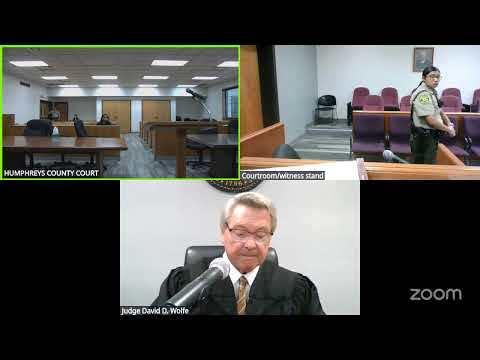
A county circuit judge granted a defense request for a more definite statement and preliminarily denied motions to quash discovery subpoenas in pretrial proceedings stemming from a fatal factory explosion.
Counsel for AAC Investments, the premises owner, argued the amended complaint was internally inconsistent and vague about whether AAC controlled the facility at issue (building 602); defense counsel said the pleading’s ambiguity could determine whether the claim belongs in workers’ compensation or civil court. Counsel asked the court to require the plaintiff to provide a more definite statement of the factual assertions supporting liability.
Plaintiff counsel responded that the case stems from a catastrophic explosion that killed 16 people and that the record — including a lease signed by the same individual on behalf of both AES (the operator) and AAC (the landlord) — gives fair notice of the theory of recovery. Plaintiff counsel also pressed for broad third‑party production: security camera footage, photos, maintenance records and related documents.
Nonparty recipients of subpoenas (described in filings as equipment vendors and service providers) and AES objected as unduly burdensome; counsel discussed narrowing requests, protective orders and proportional cost allocation for nonparties.
The court granted the motion for a more definite statement, ordering the plaintiff to file clarifying material within 30 days so the scope of discovery is clear. The court denied the motions to quash subpoenas without prejudice and directed parties and nonparties to negotiate production and protective measures: nonparties were given 30 days to start producing responsive documents and the court allowed 60 days for parties to attempt to resolve disputes before renewing motions. The judge emphasized proportionality for nonparty subpoenas and the option of a protective order.
The rulings set the next procedural steps for discovery and framed a path for resolving contested third‑party requests without immediate quashing; counsel may seek further hearings if negotiations fail.