Get Full Government Meeting Transcripts, Videos, & Alerts Forever!
Get email alerts on the Land Use Data Centers topic
No spam. Unsubscribe anytime.
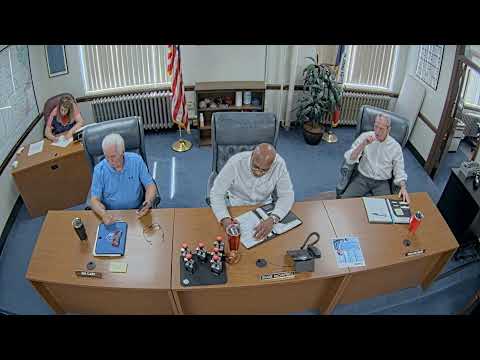
Residents press Des Moines County board on Bitcoin mining and data centers; board schedules work session
Summary
At the June 2 meeting residents asked whether county staff had shared an inquiry from Aram Capital Ventures about Bitcoin mining/data centers, raised concerns about water and power impacts, and urged a moratorium or work session; the board said staff will pursue more information and meet with the company.
Des Moines County Board of Supervisors members heard extended public comment on June 2 about a private inquiry regarding Bitcoin mining and modular data centers and the potential local impacts of such facilities.
Residents raised a letter and correspondence showing Aram Capital Ventures had asked county staff in September 2024 about whether permits or zoning would be required for two proposed sites, one adjacent to the ethanol plant and one off Highway 61. Public commenter Elsie asked Jared Ler, the county’s land use administrator, “Did you share that with the board?” and said residents felt the board had been left out of the loop.
Ler responded that the county staff’s written reply was intended to inform the inquiring company whether permits would be required and that similar inquiries are routine: “We get inquiries about similar...any kind of development anywhere in the county on a day‑to‑day basis and most of the county is not zoned,” he said, explaining that staff provide a factual response about permitting and that larger scale or jurisdiction‑altering proposals would be brought before the board.
Speakers pressed officials for specifics about infrastructure impacts. One resident cautioned that data centers can strain local water and power systems and said the board often appears to be “two steps behind.” Several commenters asked who monitors large groundwater withdrawals and whether the county should require information on water use as part of any review. County staff and a county health/land‑use commenter noted that Iowa law and the Iowa Department of Natural Resources (DNR) govern large withdrawals and well permitting; when a proposal falls inside the county’s two‑mile extraterritorial zoning area the county’s review would include consultation with utility providers and other departments.
Chris (identified in the meeting as a health/related official) summarized the statutory framework: under Iowa Code, permitting and oversight of larger withdrawals may move to state agencies when quantities exceed county permitting authority, and local review during zoning or special‑use processes calls for applicants to provide utility information and for providers to comment.
Speakers urged the board to take proactive steps, including asking the company to appear at a work session, issuing a request for information (RFI) about utility demands, and considering temporary restrictions while the county studies potential effects. The board agreed to schedule a work session and to invite the interested company to brief the board, and staff said they would pursue follow‑up information and consider whether further regulatory action is warranted.
The board did not adopt new regulations at the meeting. Members said that if a large, site‑specific proposal were formally submitted — especially within the 2‑mile Burlington extraterritorial area — the normal zoning and permitting process would trigger wider departmental and utility review.