Get Full Government Meeting Transcripts, Videos, & Alerts Forever!
Get email alerts on the Pretrial Services topic
No spam. Unsubscribe anytime.
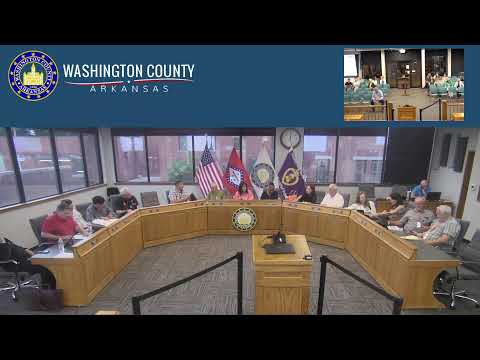
Washington County justices debate creating county pre‑trial services office amid jail overcrowding concerns
Summary
Justices discussed a proposed Office of Pre‑trial Services to reduce jail stays and improve court appearance rates; supporters cited potential savings and national models, while some justices pressed for detailed cost estimates, removal of emergency language, and broad stakeholder input before any ordinance is adopted.
Justice Rivera Lopez introduced an ordinance proposal to establish a Washington County Office of Pre‑trial Services, saying the program would expand diversion and supervision for people awaiting trial and could reduce pressure on the county jail. "By making a small dip in how many people stay in beds, we can save substantial money," Rivera Lopez said, citing an $80‑a‑day housing cost used in committee estimates.
The committee’s discussion focused on scope, cost and process rather than a vote. Sheriff Montrell Cantrell answered operational questions about the detention population and financing: "They pay $40 across the state," he said when asked about the state per‑diem; he also said the federal per‑diem is $80. Committee members pressed for more precise budget figures and asked whether the proposal’s language that treated the ordinance as an "emergency" should be removed. "I would like it removed," Justice Dennis said, arguing the matter does not meet emergency criteria and requesting a multi‑year cost breakdown including salary step increases, vehicles and ongoing operating costs before committing county funds.
Several justices and county officials outlined program options and precedents. Justice Lines summarized typical pre‑trial functions: screening, background verification, validated risk assessment and supervision, and recommended broad stakeholder engagement including judges, the sheriff, the prosecuting attorney, public defenders, probation providers and victim‑advocate groups. He noted Palaski County is currently the only Arkansas county with a formal pre‑trial office and suggested beginning with a pilot rather than a county‑wide rollout.
Public defenders and local advocacy groups urged a pilot and quick action. "We've incubated small practices with social work students and seen encouraging results," said Lyanna Hston of the public defender’s office during public comment, urging the court to secure data from test projects and to move the conversation to Finance and Budget for cost analysis.
Supporters cited national models and research showing savings and stable public safety outcomes. Sarah Moore of the Arkansas Justice Reform Coalition referenced large urban reforms and argued that pre‑trial services can reduce unnecessary jail stays without increasing reoffending.
No ordinance vote was taken in committee. Instead the court agreed to collect more information — cost estimates from the comptroller, operational models from peer counties (including Palaski County), and stakeholder input — and to treat the proposal as suitable for a pilot. The sponsor said she is willing to amend the ordinance language and to work with stakeholders before any final vote. The committee will next consider how to incorporate the requested fiscal and operational detail when the item moves to Finance and Budget.