Get Full Government Meeting Transcripts, Videos, & Alerts Forever!
Get email alerts on the State Budget topic
No spam. Unsubscribe anytime.
Greenwich delegation praises $300M boost to early childhood fund, warns budget changes weaken Connecticut’s fiscal guardrails
Summary
At a League of Women Voters forum, Greenwich lawmakers highlighted a major deposit to the state early childhood trust fund and debated recent budget changes that some said weaken long-standing spending and volatility caps.
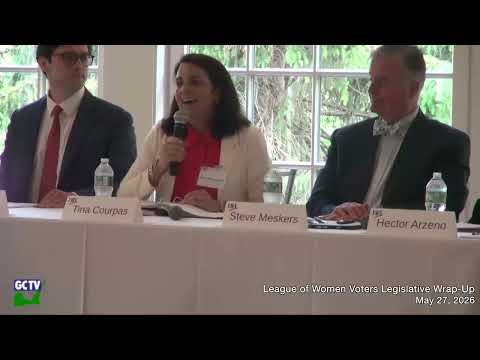
At a June legislative wrap-up hosted by the League of Women Voters of Greenwich, the town’s state legislators highlighted a major new state investment in early childhood and sparred over recent changes to Connecticut’s budget rules.
Panelists described the 2026 budget as a mixed result: they welcomed what one delegate called an additional $300 million contribution to the state’s early childhood trust fund but said other elements—particularly changes to the volatility-cap and other budget "guardrails"—raised concerns about longer-term fiscal discipline. The moderator noted the budget total at roughly $28.6 billion.
Sen. Ryan Fazio highlighted energy-related legislation he helped advance and framed it alongside fiscal priorities; Fazio said he co‑authored a recent energy reform (Senate Bill 4) that he argued provided permanent rate relief in part. Other members of the delegation emphasized investments in education and in state aid to municipalities.
Several legislators, while praising new education and school-construction funding, said the speed of negotiations during a short legislative session made it difficult to scrutinize a multi-hundred-page budget. Critics on the panel said changes to the volatility cap and other adjustments effectively loosened constraints designed to limit year‑to‑year spending growth and prioritize debt reduction. One delegate characterized recent changes as adding roughly $2 billion in future obligations and noted an 8% year‑over‑year spending increase in the adopted budget.
Supporters of the budget pointed to increased aid for municipalities, a larger rainy‑day fund balance (cited in discussion above $4 billion), and an ongoing pension funding plan. Panelists repeatedly urged careful monitoring of volatile revenues and suggested that any long‑term adjustments to caps should be paired with clear steps for taxpayer relief or prioritization of spending.
The delegation said follow‑up work will focus on clarifying the volatility‑cap mechanics, monitoring the performance and spending of the early childhood trust, and pursuing measures to direct more state funds to local education needs. The forum closed with members noting bipartisan accomplishments in areas such as environmental protections and public‑health measures.