Get Full Government Meeting Transcripts, Videos, & Alerts Forever!
Get email alerts on the Public Participation And Fees topic
No spam. Unsubscribe anytime.
Resident presses Humphreys County officials on tire-disposal fee and when the public may ask questions
Summary
During public comment, a resident asked whether the county's tire-disposal fee would require residents to pay for government vehicle tires and sought clarity about when the public can question proposed bills; commissioners explained agenda posting, contact channels, and that administrative meetings allow discussion before full commission votes.
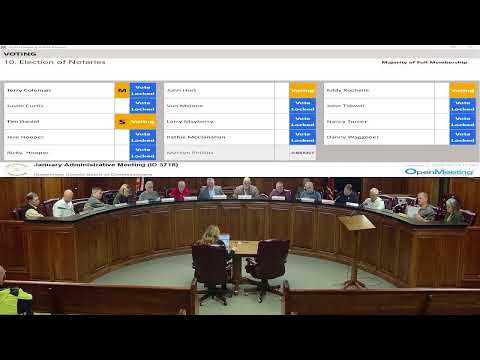
A Humphreys County resident used the administrative committee public‑comment period to press officials for clarity about the county's process for introducing bills and for details on a county tire‑disposal fee.
Robert Hegwood told the committee he had left previous questions unanswered and asked when bills are introduced and when members of the public may ask questions. "When y'all come up with a new bill, is it this meeting?" he asked, expressing frustration that some items are discussed by the committee and then voted on later. Committee members responded that agenda items are typically posted several days in advance on the county website and on the courthouse door, that administrative‑committee meetings provide an opportunity for questions and back‑and‑forth discussion, and that the full commission votes at the subsequent meeting.
Hegwood also raised concerns about a tire‑disposal fee and the county's reported $40,000 shortfall, asking specifically, "Who pays for the disposal of the sheriff's tires or the county's tires or the bus garage tires or ambulance tires or the fire department's tires? Do y'all do them [sic] or am I going to have to pay it?" County staff replied that residents would not be charged for government‑owned tires brought from county departments and explained that roughly $8,000 returned from the state countywide is used to cover landfill handling and administrative costs.
Commissioners encouraged residents to contact their district commissioners ahead of meetings to discuss items and to review agendas posted about four to five days before committee meetings. "Reach out to your commissioner for your district. That's what we're here for," Jerry Hooper said during the exchange. Justin Curtis and others reiterated that the administrative committee can discuss items and that opposition presented there can prevent items from moving forward to the full commission.
James Carter, another public commenter, opened the public‑comment sequence by thanking the county for installing signage and reducing speed limits on Stephvenson Road, saying, "If it saves a life or keeps somebody from going to the hospital… I thank each and every one of you for getting that issue taken care of." The committee did not take immediate action on the tire‑disposal question; policy specifics and any ordinance text were not provided during the meeting.
The committee advanced several budget and administrative items to the full commission; the public‑comment exchange did not result in a change to any resolution during the administrative meeting, but officials instructed residents on how to follow up before final votes.