Get Full Government Meeting Transcripts, Videos, & Alerts Forever!
Get email alerts on the County Budget topic
No spam. Unsubscribe anytime.
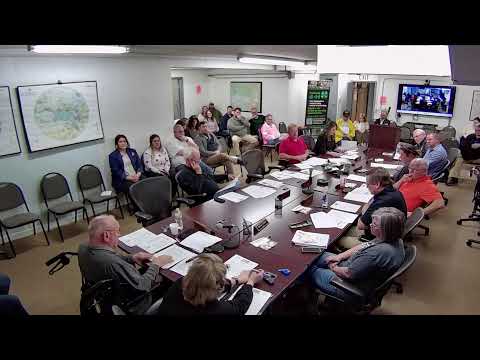
Quorum Court approves several 2025 appropriations, including hospital and victim‑assistance funds
Summary
Johnson County Quorum Court approved multiple appropriations for fiscal years 2020–2026, including small corrections to the general fund, a $105,650 solid‑waste adjustment, $117,032.37 in hospital millage funds and a $52,745.25 victim‑assistance grant allocation.
The Johnson County Quorum Court approved a series of appropriations on motions and roll calls, ranging from a $659.54 general fund correction to larger targeted allocations for solid waste, hospital maintenance and a victim‑assistance program.
Ordinance 1995 appropriated $659.54 to the county health department’s parking services line to clear a small outstanding balance; the court moved to suspend rules for second and third readings and approved the measure by roll call. Ordinance 1996 adjusted the solid‑waste fund by $105,650 to reconcile fee collections and associated charges after the county experienced higher trash volumes than budgeted. Ordinance 47‑1997 allocated $117,032.37 from the hospital millage (taxes collected in 2025) for maintenance and service contracts at Johnson Regional Medical Center.
Members discussed the reasons for the solid‑waste adjustment — increased tonnage and fee transfers — and confirmed the hospital appropriation is supported by millage and prior‑year delinquent collections. Each ordinance was read by title, motioned, and carried through the court’s suspension and second/third reading procedures.
A more contested portion of the appropriation package involved the Victim’s Assistance Grant (Ordinance 1998), which totaled $52,745.25 and was described in the ordinance as STOP Program grant funds allocated to a detective position and related line items. Court members questioned which costs the grant covers, reimbursement timing and the county’s matching obligations; those procedural and fiscal questions are detailed in a separate article on the grant debate.
The court’s actions update the county’s fiscal year appropriations and allow departments to clear prior balances and proceed with planned services and contracts. Several members asked that staff follow up with clarifying paperwork and to ensure grant reimbursements are tracked before charging ongoing expenses to county general funds.