Get Full Government Meeting Transcripts, Videos, & Alerts Forever!
Get email alerts on the Budget topic
No spam. Unsubscribe anytime.
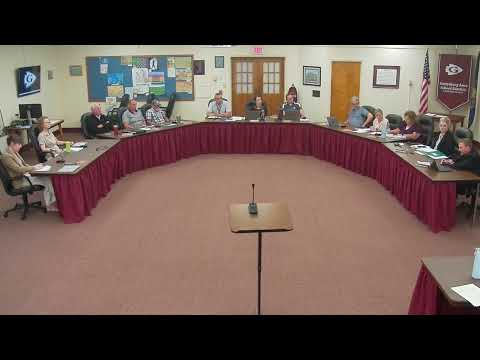
Gettysburg Area SD board adopts 3.5% tax increase to balance $82.7 million budget
Summary
Trustees approved a $82.7 million 2026–27 general fund budget and a 3.5% real-estate tax increase, citing rapidly rising special-education costs and a required 1% set-aside for the ACTI career-technical initiative. The vote passed 6–3 after trustees debated using capital reserves to soften the levy.
The Gettysburg Area School District board voted to adopt a $82.7 million general fund budget for 2026–27 and to raise real-estate taxes by 3.5 percent, the administration’s recommended option.
Belinda Wallen, the district’s budget lead, told the board the budget is driven primarily by special-education costs, planned investment in the ACTI career-technical initiative and several operating pressures such as substitute-teacher services and insurance premiums. She said the administration modeled three tax options — 2.9 percent, 3.5 percent and 4.12 percent — and showed that lower rates require using assigned capital-project funds to balance the budget.
The vote followed more than an hour of detailed questions about revenue, reserves and long-term risk. Wallen said local sources account for roughly 68 percent of the district’s revenue and that the district is roughly $2.24 percent ahead of expectations this year, largely on earned-income tax collections. She warned that special-education enrollment and out-of-district placements have driven function costs up materially and that these are largely not controllable at the local level.
“Special education has been outpacing budgeting and controlling costs,” Wallen said in the presentation and subsequent answers, noting the district used some unassigned fund balance to cover one-time shortfalls.
Board members debated how much to draw from assigned capital reserves to avoid larger tax increases. One trustee, Kathleen (Board member), urged restraint: “I contend this is still sticker shock; I am inclined to support 2.9 percent and use assigned capital funds this year.” Other trustees, including Dave (Board member), argued the district is on a structural trajectory where expenses outpace revenue and said higher levies now would avoid deeper cuts or deferred maintenance later.
After discussion the board approved the 3.5 percent option. The recorded vote on the budget adoption was 6–3 in favor; the board then voted to establish taxes to support that budget and to adopt a homestead/farmstead exclusion consistent with the approved levy.
What the vote means: under the 3.5 percent option, the average parcel example shown in the presentation would see an increase of approximately $112.36 in property tax (before homestead/farmstead reductions). The adopted package includes a mandatory 1 percent set-aside for ACTI; the board heard that the 1 percent commitment is part of a multi-year plan to develop career-technical facilities and programming.
Next steps: administration will implement the adopted budget and proceed with routine financial actions (depositories, contracts) approved during the meeting. The board also scheduled follow-up reporting on five-year cash-flow projections and the capital plan.
Vote at a glance: the budget adoption motion passed (yes: 6; no: 3). Other related motions to establish taxes and the homestead/farmstead exclusion also passed in separate recorded votes.