Get Full Government Meeting Transcripts, Videos, & Alerts Forever!
Get email alerts on the Public Water Systems topic
No spam. Unsubscribe anytime.
Blanco County debates requiring evidence of TCEQ progress before plat approval
Summary
County officials and developers discussed whether Blanco County should require final Texas Commission on Environmental Quality approval before plat sign-off, or accept evidence of active work (phase-one approvals, applications, bonds) to avoid years-long delays in subdivision development.
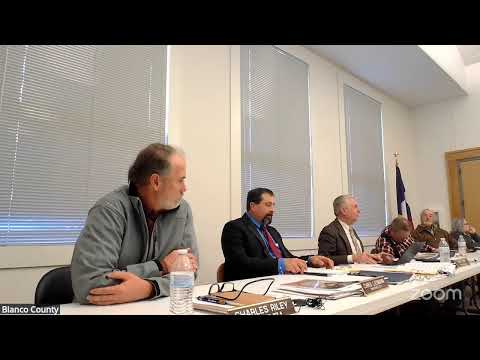
Blanco County commissioners, staff and developers spent the bulk of a workshop debating how subdivision rules should treat public water system approvals from the Texas Commission on Environmental Quality (TCEQ). Commissioners raised a timing conflict between the county’s plat review window and TCEQ’s multi-step certification process; developers warned that requiring final TCEQ authorization before plat approval could stall or kill projects.
A county staff member proposed changing the subdivision language so applicants show evidence they are "actively working" toward TCEQ and groundwater-district approvals instead of requiring completed TCEQ final authorization. The suggested evidence would include submitted applications, correspondence and other documents demonstrating progress. The staff member also proposed that if TCEQ later denies a proposed public water system, the applicant must report that denial to the Commissioners Court so the court can consider remedies.
A consultant explained TCEQ’s two-step review: phase one typically authorizes construction based on design and groundwater-availability studies, while phase two is a final inspection and testing sequence that issues authorization to use the system. The consultant urged the county to consider permitting based on phase-one approvals or comparable documentation while disclosing residual risk to prospective buyers.
Developers said many projects proceed at substantial commercial risk before final TCEQ signoff because TCEQ reviews can take months or years. One speaker said requiring final authorization would force builders toward private wells or smaller lot plans, undermining centralized systems and potentially increasing total groundwater extraction.
Commissioners discussed intermediary options: (1) require a commitment or legal covenant from the developer acknowledging the need to obtain TCEQ approval and allowing the county to withdraw plat approval if the system is never approved; (2) accept phase-one TCEQ approvals or clear evidence of active filings as sufficient for plat approval; or (3) require bonds or operator financial assurances to ensure completion if TCEQ delays or denial occur.
The county’s code consultant and staff acknowledged a balance between consumer protection (ensuring safe, approved public water systems) and avoiding regulatory deadlock that prevents development. No formal change was adopted during the workshop; staff were asked to draft specific language to present to the court addressing commitment language, evidence standards (phase one vs. final approval) and reporting requirements if TCEQ denies an application. The court moved to the next agenda item after the discussion.