Get Full Government Meeting Transcripts, Videos, & Alerts Forever!
Get email alerts on the Land Use Development topic
No spam. Unsubscribe anytime.
Killingly wetlands commission closes public hearing on Ryan Companies’ warehouse after months of technical review and widespread public concern
Summary
After five months of technical review and four nights of public testimony, the Inland Wetlands and Watercourses Commission closed the public hearing on Ryan Companies’ 556-acre warehouse application, agreeing to continue action to the July meeting while staff prepares draft conditions. Residents at the hearing raised concerns about blasting, groundwater, truck traffic and lithium battery fire risks.
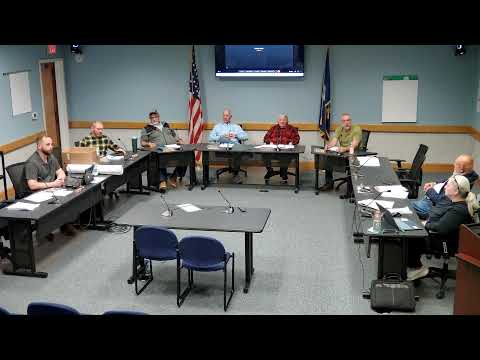
The Inland Wetlands and Watercourses Commission closed the public hearing on Ryan Companies’ application (26-1624) for a large warehouse complex — commonly discussed as the Husky/Amazon project — after an extensive presentation from the applicant’s team, a peer reviewer, and hours of public comment.
The hearing, opened in March and continued multiple times, culminated Tuesday with a technical briefing from the applicant’s attorney and consultants and a lengthy question-and-answer period. Jonathan Blake, staff to the commission, summarized the application and noted the project has been reviewed by an independent third-party consultant, Tai & Bond, whose May 28 letter concluded the revised plans generally conform to town and state standards but recommended conditions the commission could include in any approval.
Tom Cody, attorney for Ryan Companies, told the commission the application has undergone ‘‘five months of extensive review’’ and described recent changes made in response to regulator and peer-review comments, including removing a second driveway to reduce impervious area and eliminating two bridge crossings. Dean Gustoson, the project’s wetland scientist, detailed a multi-layer mitigation strategy that includes wetland creation and restoration, a 1.42:1 mitigation ratio for unavoidable impacts, nearly 300 acres of conserved land, invasive‑species management, and five years of post-construction monitoring.
Engineering consultant Timothy Andurko said the removal of the western access reduced impervious surface by more than one acre and reduced upland review-area disturbance by roughly six acres; he described the stormwater design as a multi-step treatment train that includes hydrodynamic separators, underground detention, ‘‘Jellyfish’’ filters and a level spreader before discharge to on-site wetlands.
Commissioners and the town’s peer-review team pressed the applicant on a set of recurring technical issues. Commissioner Karina Tori pressed for greater detail about blasting plans, vibration and groundwater‑redirecting effects from rock fracturing, and site‑specific chemical and hydrogeologic modeling. The applicant said contractor-level blasting plans (charge sizes, sequencing, monitoring) generally are prepared when a contractor bids and will be reviewed by the town fire marshal; the applicant and consultants also pointed to perimeter erosion controls and the project’s stormwater train as protections against possible seepage. Tai & Bond recommended specific pre‑blast surveys and conditions to be included in a decision.
Public commenters raised multiple concerns that were wide-ranging but focused on water and construction risks: residents described observed fish kills and drying private wells at Old Killingly Pond, warned that blasting near a high water table could threaten the Hopkins/Brook wellfields and private wells, and urged the town to require escrow or cash security for mitigation and long-term monitoring. Experts and citizens also warned about fire risks inside large warehouses holding lithium batteries and the potential for large-volume, chemically contaminated runoff from a warehouse fire — points the applicant said would be addressed by building, fire‑marshal and state stormwater permitting and by contingency plans and valve/shut‑off measures on outlet piping if the commission requests them.
Tai & Bond recommended conditions to preserve the commission’s ability to review site changes during construction: peer‑review oversight, performance security for erosion and for mitigation, clearly drafted conservation easement documents, pre‑blast surveys and contractor‑level blasting submittals, and documentation of the Army Corps’ jurisdictional determination when available. The applicant said it agreed to the third‑party conditions and offered three additional conditions around conservation‑easement filing and boundary marking.
After hearing the applicant, consultants and dozens of public speakers over many hours, the commission voted to close the public hearing on 26-1624 and, by separate motion, to continue formal action on the application to the commission’s July meeting. The applicant consented to the extension. Staff will prepare draft conditions based on the peer-review recommendations and commission requests for the July session.
What changed: Removing the second access driveway was the principal design change presented at the hearing; applicant witnesses said the change reduced direct wetland and upland review impacts and eliminated two bridge crossings. What remains unresolved on the record are contractor‑level blasting details, specific vibration analyses, Army Corps jurisdictional findings (a draft JD is reportedly under review at the Corps) and the final form and amount of financial security (escrow or cash) the town might require for mitigation performance and erosion control.
The commission’s next scheduled action on the application is the July meeting; staff said a narrow statutory deadline allows a short calendar to finalize decisions and conditions and that they will circulate draft findings and conditions ahead of that meeting.
Speakers quoted in this article appear in the commission record and include staff, applicant counsel and consultants, the town’s peer reviewers, commissioners and multiple members of the public. Representative quotes:
• "We've now gone through five months, four hearing sessions, three rounds of review with your independent third‑party reviewer," Tom Cody said, noting the technical reviews and revised submittals.
• "We will prepare and submit at that time a specific [blasting] plan that would identify water‑quality protection measures," Cody said when commissioners asked for blasting details.
• "If you had to fight a fire and that runoff ended up on the parking lot, it would go through all of the treatment measures that we have on site," said Timothy Andurko, explaining redundancy in the filtration and detention chain.
• "One well is too many wells to dry up," Dr. Angelina Wagner said of residents whose wells have shown reduced yield since the pond drawdown.
What’s next: The record remains open only in the sense that the commission has continued the formal decision to its July meeting; the commission instructed staff to compile peer‑review conditions and to circulate draft decision language to members ahead of the July session. The Army Corps jurisdictional determination — if issued before July — and any remaining contractor‑level blasting and pre‑blast survey documents will be materials the commission or staff may add to the record for consideration.
This account relies exclusively on testimony and documents presented on the record at the June 1 meeting, peer‑review letters submitted to the commission, and public comment recorded during the hearing.