Get Full Government Meeting Transcripts, Videos, & Alerts Forever!
Get email alerts on the Water And Sewer Rates topic
No spam. Unsubscribe anytime.
Portsmouth staff propose shifting more water and sewer costs to fixed fees as grants dry up
Summary
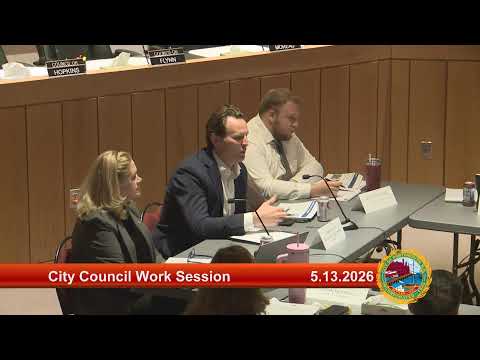
City staff told the Portsmouth City Council May 13 that a water and sewer rate study recommends increasing fixed service fees and creating a lower essential-use tier to shore up reserves and pay for aging infrastructure as state and federal grant funding declines.
Portsmouth staff on May 13 summarized a rate-study recommendation that would shift a larger share of water and sewer revenue to fixed monthly service fees to stabilize enterprise fund reserves and cover rising infrastructure and debt costs.
“We replaced just under two miles of pipe this year,” said Peter Rice, the city’s director of public works, describing ongoing capital work on reservoirs, tanks and mains and warning that many supplemental grant programs are winding down. “We get about a million dollars from [the Air Force] a year to operate that facility,” Rice said, referring to the PAS treatment facility at Pease that the Air Force helps fund.
The study, presented by Al Pratt, recommends moving some revenue from use-based charges into fixed service fees and splitting the lowest usage tier (previously 0–10 units) into two tiers so that essential residential customers are less affected. Pratt said the change will raise the monthly fixed fee for a typical 5/8- or 3/4-inch meter to about $10.94. That combination of adjustments equates to roughly $1.44 more per month — about $17.28 per year — for a typical customer using five units.
Why the shift: staff told the council that a greater fixed-fee share better matches costs tied to maintaining system readiness and paying debt on long-lived assets. “There’s so much cost that has gone into the infrastructure that it’s important to shift some of that to a fixed service fee,” Pratt said.
On the sewer side, Eric Feedler, engineering supervisor, described the system’s scale and regulatory workload — about 6,700 sewer connections, 120 miles of sewer lines, 21 pump stations and three permitted combined-sewer-overflow (CSO) locations — and outlined a parallel move to add a fixed sewer fee to capture baseline infrastructure costs.
Feedler and Rice highlighted recent capital wins: substantial sewer-separation projects that reduced annual flow at Pierce Island from earlier peaks, targeted rehab work (a consent-decree modification redirected a rehab phase to a high-benefit repair on Siri Street), and roughly $37 million in state grant/loan support for sewer projects in the past year (about $8.4 million as grant).
Councilors pressed staff on timing, cash flows and regulatory risk. Councilor Taber asked whether the city should seek to reopen its consent-decree obligations given the reduction in CSO volumes; staff said the long-term control plan and regulator discussions will be revisited around 2028 through the municipal adaptive-management process, and that regulators will weigh remaining nonpoint-source issues and science before changing obligations.
Several councilors requested follow-up reports: a breakdown showing which of the roughly 1.6 new enterprise FTEs are driven directly by regulatory requirements versus operational needs, vacancy lists for positions open longer than three months, and a ten-year look-back on parking transfers and fund balances (see separate article).
The rate adjustments and the larger FY27 enterprise budget recommendations will return to the council in upcoming hearings; staff noted they review the rate model annually and will monitor fund performance before implementing further increases.
The council’s next formal budget steps are a public hearing at the regular meeting next Monday, a third work session May 28 and the June 8 discussion about adoption.