Get Full Government Meeting Transcripts, Videos, & Alerts Forever!
Get email alerts on the Personnel Hiring Freeze topic
No spam. Unsubscribe anytime.
Spokane County commissioners consider targeted hiring freeze as 2027 budget concerns grow
Summary
At a June 1 strategic planning meeting, Spokane County leaders discussed a proposal to institute a hiring freeze for departments under the Board of County Commissioners to help close an anticipated 2027 budget gap; commissioners sought exceptions for critical public-safety and court positions and asked staff to develop a prioritized exception process.
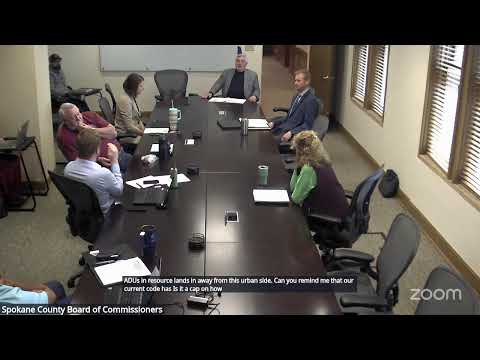
At its June 1 strategic planning meeting, the Spokane County Board of Commissioners discussed a proposal from county staff to implement a hiring freeze on positions under the board's authority to help address a projected budget shortfall in 2027.
County budget staff told commissioners the freeze would allow departments to use attrition and internal promotions to reduce full-time equivalents and prioritize core services. Staff proposed allowing selective backfills for critical roles and permitting the county CEO to sign off on exceptions. "We would stop posting new positions," a county budget official said, while stressing that offers already extended would be honored.
Commissioners pressed for clarity about operational impacts, repeatedly flagging public-safety consequences. Commissioner Jordan said she was "very concerned about the projected imbalance in the budget next year" and asked how the policy would treat the public defender system, which faces court-mandated obligations; staff replied they would evaluate positions on a case-by-case basis and recommended preserving hiring flexibility for uniquely constrained functions.
Law-enforcement staffing and detention operations drew particular attention. County staff and a sheriff's representative said that some detention roles are exceptionally difficult to recruit, recommending targeted exceptions (for example, kitchen/cook positions in detention) rather than broad cash bonuses for all hires. Commissioners also discussed the trade-offs between hiring freezes and downstream costs from slower case processing and increased overtime.
Board members asked staff to develop a clear exception and prioritization framework and to brief elected department heads directly. Several commissioners suggested meeting one-on-one with other elected officials or convening a small group before issuing a formal public notice so that message and process are better understood.
Next steps: staff will refine the recommended hiring-freeze policy, outline a prioritization and exception process for critical positions, and return with clearer draft language and estimated fiscal impacts before any formal board action.