Get Full Government Meeting Transcripts, Videos, & Alerts Forever!
Get email alerts on the Waste Management topic
No spam. Unsubscribe anytime.
Student project urges hauler 'sorting reports' and cameras as Redwood landfill nears capacity
Summary
A student ambassador presented an MBA project recommending hauler-mounted contamination-detection technology and phased enforcement to strengthen SB 1383 compliance, citing a waste-characterization study that found about 60% of landfill material is divertible and warning that the Redwood landfill will reach capacity in coming decades.
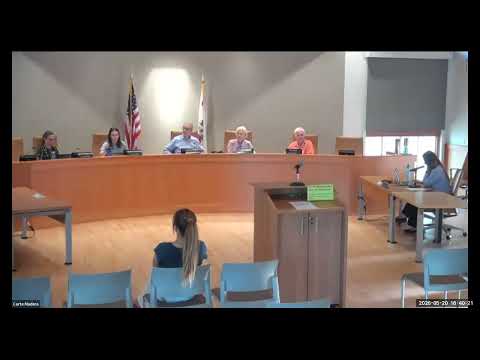
At the May 20 meeting Britney, the committee’s student ambassador, presented an MBA project proposing a multi-year plan to strengthen SB 1383 compliance in Marin County by combining resident education with hauler-mounted technology that detects contamination and issues "sorting reports" (photo-based feedback accompanying a resident's trash bill).
Britney described the proposal as a phased approach: year one focused on education, year two on warnings, and year three on modest fees for persistent noncompliance. She said pilots by local haulers have tested camera and detection technology but vendors sometimes failed to meet hauler needs. "We've been looking at technology that would go on haulers to detect contamination immediately," Britney said, and added that Marin Sanitary Service has piloted similar systems.
The presentation cited a 2025 waste-characterization study indicating roughly 60% of what goes to the Redwood landfill is divertible, with about 35% of that being food waste. Britney and members warned the landfill's projected closure window is decades away but nearer than residents assume; the project notes the landfill is projected to reach capacity sometime in the 2045–2055 range and that alternatives for disposal remain uncertain.
Committee members discussed likely public pushback over cost and privacy questions and noted examples such as Oakland truck-camera programs that penalize overflowing trash. Staff and members also signaled interest in bringing the proposal to the county-level task force for wider discussion, and Britney said she would present the proposal to the local task force in July and share a pre-read with the committee.
The committee did not take formal action on the proposal at the May meeting, but members encouraged further development and cross-jurisdictional discussion.