Get Full Government Meeting Transcripts, Videos, & Alerts Forever!
Get email alerts on the Faith Community Partnership topic
No spam. Unsubscribe anytime.
Florida Chamber to fund churches’ responses through Care Portal in statewide partnership
Summary
At a state faith-and-community panel, the Florida Chamber of Commerce and Care Portal announced a partnership—brokered by the Governor’s office and the First Lady—to fund and scale a technology platform that connects local churches and businesses to vetted needs of families; leaders cited program metrics and said the Chamber will cover costs so congregations can respond more broadly.
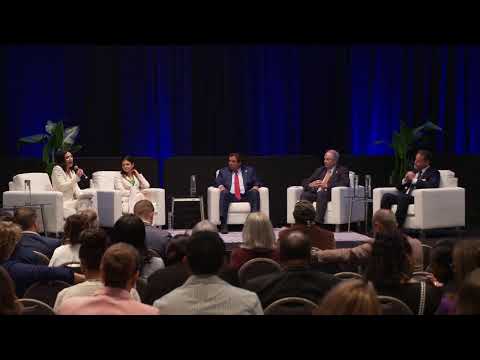
The Florida Chamber of Commerce will fund churches’ responses to needs posted on the Care Portal platform under a new partnership announced at a faith-and-community panel attended by the Governor, the First Lady and leaders of Care Portal.
The First Lady said the Chamber’s Prosperity Initiative will cover costs that previously limited some congregations’ ability to respond, allowing more churches to accept and act on requests entered by caseworkers, hope navigators and other local partners. "Now you can go be the hands and feet of Jesus, and the private sector...is going to support your mission and fund that," she said.
The announcement frames the effort as an expansion of a navigation model the Governor described as linking families who seek help to faith-based and private resources beyond what government can provide. At the panel the Governor called the approach a way to "link people in need to all these different resources that are there" and credited navigators and volunteers for individual success stories.
Speakers cited program metrics as evidence of the model’s reach. The moderator said Florida has seen a "47% decrease in the number of children that are in out-of-home care" since 2019, and said 35,000 Floridians have participated in Hope Florida; the moderator also attributed roughly $145 million in annual taxpayer savings to those reforms. Care Portal’s speaker, Joe, said Care Portal has connected more than 73,000 adults and children in Florida and generated about $22 million in economic impact; he said nationally the platform has served more than 750,000 people. Those figures were presented by panel participants and were not independently verified in the session.
Mark, president of the Florida Chamber of Commerce, described the Chamber’s role as a "dot connector" that can marshal business resources where needs are concentrated. He said about 711,000 children in Florida live in poverty distributed across 983 zip codes and that a majority of child poverty is concentrated in a small share of zip codes; he argued the private sector often lacks that hyperlocal visibility and that Care Portal can provide it.
Panelists said the partnership will also expand who can input needs into Care Portal, naming hope navigators, child-protective investigators, guardian ad litem volunteers and local churches as sources of referrals. The First Lady also described pilot outreach to nursing homes so congregations can request simple volunteer gestures—"Can you deliver flowers to a nursing home?"—through the platform.
Care Portal leaders and the Chamber urged congregations and businesses to sustain relationships after initial aid. "This is a movement of bottom-up empowerment of neighbors seeing and serving neighbors," Joe said, and he warned that long-term engagement—"Will we stay?"—is essential for durable outcomes.
Next steps specified at the panel were limited to outreach and scaling: the Chamber will work through local chambers to expand funding and the state will broaden which actors can enter needs into the portal. The speakers did not announce new statutory changes or funding appropriations by the state; program details such as exact budget commitments and rollout timelines were "not specified" at the event.