Get Full Government Meeting Transcripts, Videos, & Alerts Forever!
Get email alerts on the Technology Demo topic
No spam. Unsubscribe anytime.
Autonomous ‘Waist Shark’ litter-collecting drones demonstrated at Lake Hopatcong coordinators meeting
Summary
A Rainarine representative demonstrated two autonomous litter-collection drones — the small “Waist Shark” and a larger “Mega Shark” — on Lake Hopatcong during a Clean Communities coordinators event organized with the New Jersey Clean Communities Council, the Lake Hopatcong Foundation and the Morris County MUA.
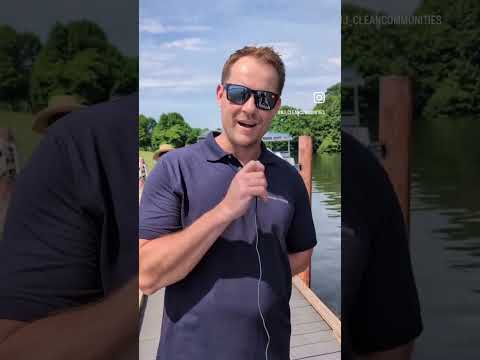
Tom, of Rainarine, demonstrated two autonomous litter-collection drones on Lake Hopatcong during a Clean Communities coordinators event with the New Jersey Clean Communities Council, the Lake Hopatcong Foundation and the Morris County MUA. The on-water demo, captured in a short video-style segment, showed a small skimming unit and a larger support craft intended for collecting floating debris.
The demonstration’s central exhibit was the “Waist Shark,” which Tom described as “an autonomous drone designed to collect any kind of floating litter, debris, plastic.” He said the company also brought a larger unit, the “Mega Shark,” which he characterized as “about five times the size of the Waist Shark.” Tom closed the segment by directing viewers to the company website, randusa.com.
Organizers framed the event as a partnership-focused coordinators meeting bringing together the statewide New Jersey Clean Communities network, a local foundation and the Morris County Municipal Utilities Authority. The recording opens with a voiceover invitation that lists those partners and then moves to the on-water equipment demo.
No formal votes, motions or policy actions were recorded in the segment. The material shown is a technology demonstration intended to illustrate equipment options for lake and shoreline cleanup; the recording does not include details on procurement, funding or operational plans. The video-style segment ends with closing music.
Tom’s remarks were the only substantive spoken presentation in the recording. The transcript uses a couple of variant place names for the lake; this article uses the conventional local spelling, Lake Hopatcong, for clarity.