Get Full Government Meeting Transcripts, Videos, & Alerts Forever!
Get email alerts on the Armenia Referendum Nagorno Karabakh topic
No spam. Unsubscribe anytime.
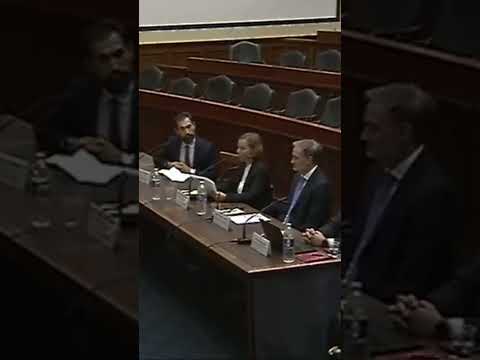
Presenter: Narrow Pashinyan win would force referendum on Nagorno-Karabakh constitutional language
Summary
A presenter argued that the key question for Armenia's future is not whether Prime Minister Nikol Pashinyan wins but by how much; a narrow margin would complicate efforts to change constitutional language related to Nagorno-Karabakh and would require a national referendum, the presenter said.
"The thing to watch, in my opinion, is not whether Pashinyan wins, but by how much," the Presenter said, arguing that the size of any victory will shape the scope of the government's mandate.
The Presenter said a narrow margin would "reveal insufficient support for the government's more ambitious priorities," and could change what is politically possible after the election. The speaker emphasized that one major item that cannot be decided by a parliamentary majority alone is a change to Armenia's constitution to remove language that Azerbaijan reads as a territorial claim on Nagorno-Karabakh. "A change of that kind cannot be made by parliament alone," the Presenter said. "If insisted upon, it must be put to a national referendum."
Putting the constitutional language to a referendum, the Presenter said, presents a difficult question for Armenians. The speaker recalled the consequences of the 2020 war, saying Armenia lost both territory and soldiers, and noted that "three years later, within a week, more than 100,000 Armenians were displaced from Nagorno-Karabakh as Azerbaijan retook the territory." That recent history, the Presenter argued, makes a referendum a vote on whether to make peace that entails territorial loss permanent and final.
The Presenter also described Prime Minister Pashinyan's political pivot after the 2020 war, saying he moved away from reliance on Russia "which had not defended Armenia," and advanced the argument that the country's security and prosperity "lie in a state built within its recognized borders and at peace with its neighbors." The speaker framed that position as logical but costly: "making peace with neighbors on their terms means making peace with loss. And the referendum asks Armenians to make that peace final."
The transcript records no formal motions, votes, or decisions. The remarks are framed as analysis of the political and constitutional implications of an electoral result; the presenter identified the referendum as the procedural step required for the constitutional change discussed.