Get Full Government Meeting Transcripts, Videos, & Alerts Forever!
Get email alerts on the Flood Vulnerability Assessment topic
No spam. Unsubscribe anytime.
County presents flood vulnerability assessment to barrier-island leaders, maps risks to public infrastructure
Summary
Pinellas County and consultant HDR presented a draft flood vulnerability assessment for ten coastal municipalities and unincorporated Pinellas County, outlining present-day through 2100 flood scenarios, community survey results and a timeline for finalizing reports and seeking resilience grants.
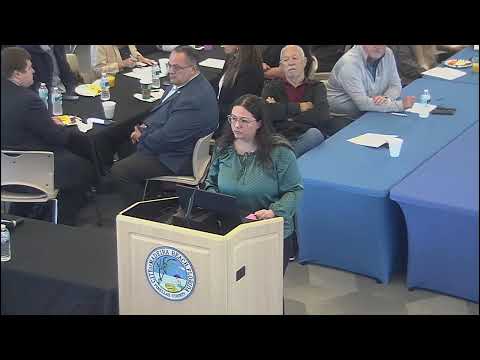
Pinellas County officials on Feb. 25 presented a draft flood vulnerability assessment to the Barrier Islands Governmental Council, outlining which public assets are most at risk under tidal, storm surge, extreme rainfall and groundwater scenarios and what communities must do to compete for resilience grant funding.
The study, presented by Josie Benwell of Pinellas County Public Works and Sharon Wright of HDR, assessed impacts to critical community facilities, utilities, transportation corridors and natural and cultural resources for a baseline year and future horizons through 2040, 2070 and 2100. "The flood vulnerability assessment is essentially done to inform communities about the flood vulnerability of the public infrastructure and to prioritize flooding related risks," Benwell said.
Why it matters: the assessment is a prerequisite for communities to apply for Resilient Florida and similar resilience grants and helps local officials prioritize projects. Benwell told the council the work was funded through the 2021 gaming compact between the Seminole Tribe of Florida and the state of Florida, and that projects funded by implementation dollars have ranged from multimillion-dollar drainage and utility upgrades to larger-scale improvements.
Wright described the technical approach: assembling GIS inventories, conducting exposure analysis across 21 flood scenarios, applying sensitivity thresholds tied to asset criticality, and producing maps and scores to guide prioritization. She said the most severe impacts occur where storm surge compounds with sea-level rise and that regionally significant infrastructure—evacuation routes such as Gulf Boulevard, the airport and the county waste complex—show pronounced vulnerability. "When it's compounded with other things, it tends to have higher flood severity and more impacts to your assets," Wright said.
The presenters highlighted community engagement: county staff and consultants gathered more than 500 survey responses and attended outreach events; Benwell said "more than half of the respondents said that they consider flooding when deciding where to live." Respondents ranked roads, electricity, telecommunications and buildings among their top concerns.
Municipality-level differences were noted: coastal towns are more affected by tidal flooding while some inland areas show greater exposure to extreme rainfall and stormwater conveyance failures. The presenters also reported minimal impacts in modeled scenarios to emergency shelters, a point they described as positive for current shelter planning.
Next steps and funding: draft vulnerability assessments will be distributed to municipal staff for review this week; a county public meeting is scheduled for March 19 for additional comment. The county expects adaptation-planning work to continue through August or September to meet state submission timelines, and officials cautioned that most implementation grants require a typical 50% local match. "You should have a couple of weeks to review those," Wright said; "that will lead them into what to do" for adaptation planning.
The council did not take formal action on projects during the meeting; presenters encouraged municipalities to identify capital-plan priorities and focus areas for future adaptation proposals.