Get Full Government Meeting Transcripts, Videos, & Alerts Forever!
Get email alerts on the Community Power topic
No spam. Unsubscribe anytime.
Portsmouth Council hears Community Power update as members press for clearer rate communications
Summary
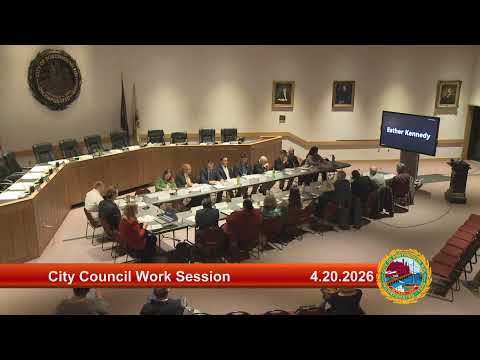
Portsmouth City Council hosted an update from the Community Power Coalition of New Hampshire on enrollment, reserves and market conditions; council members and the public pressed the coalition for clearer mailers, easier opt-out switching and more transparency after recent rate periods favored utilities.
Portsmouth — Portsmouth City Council on Monday heard a detailed update on the city’s Community Power program and pressing questions about customer communications, participation and reserve levels.
Henry H. Hearnen, executive director of the Community Power Coalition of New Hampshire, told the council Portsmouth was among the earliest adopters in 2023 and that the coalition now supports dozens of municipalities. “We are an extension of those municipal governments and their municipal authorities under state law to develop local control energy supply programs,” Hearnen said, describing the coalition as a nonprofit joint powers agency formed by 68 New Hampshire cities, towns and counties.
Jackson (Jack) Kaspari, the coalition’s director of member services, walked the council through program tools and recent metrics. As of April 1 the coalition reported roughly 11,500 active Portsmouth customers — about a 70% participation rate — and estimated cumulative participant savings of about $1.6 million. Kaspari said community-held joint reserves stood at $586,000 and were forecast to rise, under a central scenario, to roughly $1.3–$1.6 million in coming rate periods.
The coalition outlined rate composition: the average Portsmouth rate was presented at about 14.5 cents per kilowatt-hour, with roughly 82% of that tied to energy and required renewable purchases, about 14% allocated to community reserves, and roughly 4% for operating expenses. Kaspari said the reserve “adder” is a board-set component intended to stabilize rates over time.
Council members focused much of the discussion on customer communications and data transparency. One councilor raised an apparent discrepancy between a website report that listed 372 new opt-outs and the presentation slide that listed 33; Kaspari said the dashboard shows week-by-week trends while the public-facing report is a different “moment-in-time” capture and offered to reconcile the figures.
Several councilors criticized the coalition’s decision to simplify enrollment mailers into shorter postcards that do not show the default utility (Eversource) rate alongside the community power rate. “It would be helpful to include the cost of the electricity and show the difference,” a council member said, arguing residents should be able to make easier, frictionless comparisons before deciding whether to remain enrolled or opt out. The coalition said customers can use an online shopping tool to compare suppliers and that it will consider council feedback on future mailings.
Some councilors also urged the coalition to make the online opt-out and switching flows less friction-prone (fewer external calls and timeouts) so residents can complete actions more reliably on a Portsmouth landing page rather than being bounced to external state pages.
Affordability emerged as a key concern. One councilor noted that for some customers the community power supply tier can carry roughly a 30% premium (about $22 per month or roughly $300 per year) compared with the utility default and said the council must weigh sustainability goals against broad affordability for households that do not opt up to green tiers.
Don Crease, the state’s consumer advocate, told the council he does not recommend the city withdraw from the Community Power Coalition. Crease said the joint powers model provides clearer purchasing scale than a single municipality going it alone and urged better public information and easier switching. “Customers should migrate back to Eversource when the rate is cheaper,” Crease said, adding that consumers need “frictionless switching” and better access to objective price comparisons.
Councilors and the public also discussed state policy developments. Council members asked about House Bill 1733, a recently considered statute that sought to change utilities’ procurement rules and limit shifting under‑collections onto community power customers. Presenters said the bill passed the House unanimously but the Senate removed a strict prohibition on spot-market purchases; the final form left some protections uncertain.
Public commenters including State Representative Ned Reynolds urged the council to remain in the coalition, saying the recent period in which the community power rate exceeded the utility rate stemmed in part from prior regulatory directives that increased spot-market exposure. A resident raised concerns that reserves are low, that reserve growth may require higher rates, and that communications about why neighboring customers’ bills differ need to be clearer.
The council did not vote on withdrawal during the work session; council members referenced an earlier motion to ask the city manager to report back on withdrawing from the coalition and noted that the Energy Advisory Committee discussed that motion but did not recommend immediate withdrawal.
What’s next: councilors asked staff and the coalition for clearer, consistent public communications — including showing the default utility rate alongside community power rates on enrollment materials and improving the web experience for switching — and said they expect further follow-up at the council meeting and through the Energy Advisory Committee.