Get Full Government Meeting Transcripts, Videos, & Alerts Forever!
Get email alerts on the City Budget topic
No spam. Unsubscribe anytime.
Portsmouth reviews $157.97 million FY27 budget; health insurance and county tax drive proposed increases
Summary
City staff presented a $157,971,390 FY27 proposal that would raise the tax rate to $12.70 per $1,000 of assessed value (a roughly $435 increase on the median home) and attributed most of the budget growth to rising health insurance costs and county tax estimates; council requested follow‑up analyses on cuts, vacancies and fixed contractual obligations.
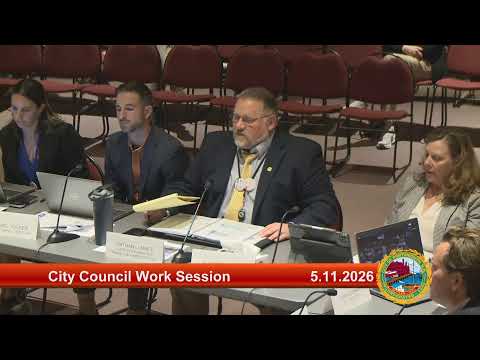
The Portsmouth City Council held a May 11 work session to review a proposed FY27 budget of $157,971,390, a $7.676 million increase from the prior year (a 5.11% year‑over‑year rise), city staff said.
City Manager Karen opened the presentation and asked councilors to focus on tax‑rate impact and public engagement through a multi‑meeting review process. Nathan, who led the budget presentation, framed health insurance as the largest single driver of the increase: “health insurance is the largest driver of our budget this year,” and staff attributed $3,323,000 of the proposed change to higher premiums, which the presentation said represent 2.21 percentage points of the overall 5.11% increase.
Nathan said the proposed tax rate would be $12.70 per $1,000 of assessed value, which the presentation estimated would raise property tax bills by about $435 for a median single‑family home valued at $777,200. He also said the operating portion of the budget represents roughly 82% of the gross budget and that salaries and benefits account for about 68% of total appropriations.
Staff highlighted several other headline items. Port Edge, the city’s new enterprise resource planning (ERP) system from Tyler Technologies, will introduce recurring carrying costs for finance and human‑capital modules; police computer‑aided dispatch and records management system costs also appear as ongoing nonoperating expenses. Nathan said the nonoperating budget totaled about $27.8 million (roughly 18% of the total) and that the Rockingham County tax estimate was a notable upward pressure discussed with county officials.
On staffing, the proposal shows a net reduction across city funds: approximately 6.32 FTEs fewer overall in the proposed budget and a net reduction of about 9.06 FTEs in the general fund this year, with offsets that add positions in enterprise and special‑revenue funds. Staff noted a set of targeted additions funded by savings — including converting a shared inspector position to full time and adding a fire training officer paid from workers‑compensation savings.
Councilors pressed staff on specifics. Questions sought line‑by‑line scenarios that would bring the tax‑rate increase closer to the 3.5% guidance councilors previously discussed, a breakdown of fixed contractual obligations versus new cost centers, vacancy counts by department, and an explanation of workers‑compensation premium changes and which pools/providers (noted in the presentation as Primex) accounted for increases and decreases.
Nathan told the council that a collective‑bargaining contingency of $460,000 had been included to cover negotiations and that, without health insurance costs, the remainder of the proposed increase would be about 2.9%.
The session also included department‑level briefings: the police chief reported full implementation of body cameras and accreditation activity and said the department is recruiting to fill current vacancies; planning and inspections staff said permitting volumes have remained strong; library and community‑services staff highlighted outreach initiatives; and school district officials reiterated that schools comprise the largest share of the request, about $71.6 million (roughly 45% of the total). The superintendent said school health insurance contributes materially to school budget growth.
No formal votes were taken at the work session. The city opened the public hearing period, which staff said would remain open through the month of May and will include multiple opportunities for public input. Councilors asked for several follow‑up reports that staff committed to produce ahead of subsequent budget review meetings.
The council will continue review in later sessions and will consider a final adoption timeline in early June.