Get Full Government Meeting Transcripts, Videos, & Alerts Forever!
Get email alerts on the Curriculum And Coaching topic
No spam. Unsubscribe anytime.
BASD shows measurable reading and math gains; board grills coaching vendor amid budget squeeze
Summary
District presenters said benchmark data show notable gains (district at 63% at/above benchmark vs 44% in 2022–23) and cohort growth; board members raised concerns about a proposed SRB coaching contract's cost and asked for narrower, classroom-focused options before committing.
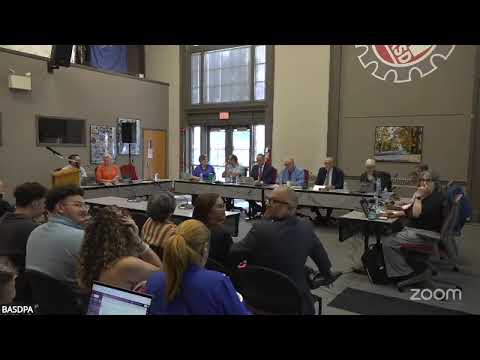
District curriculum leaders presented end-of-year benchmark results June 1, telling the board that the Bethlehem Area School District’s percentage of students scoring at or above benchmark rose to 63% this year from 44% in 2022–23, and that cohort measures show multi-year gains (an example cohort averaged roughly 546 on an earlier measure and is now averaging about 762 entering high school).
Presenters credited a coherent, through-line curriculum, job-embedded coaching, and two district math coaches for much of the progress. "That is a lot of work that has happened over time and I'm really proud of how you take that column from the 22–23 school year before we instituted a new curriculum… we are increasing that number as we move along," said Mr. Amato, who walked the board through grade-by-grade highlights and cohort trends.
The data briefing prompted a prolonged board discussion about sustaining coaching and whether to fund a proposed contract with the Southern Regional Education Board (SRB) to deliver instructional and leadership coaching. The SRB proposal described multi-component services for elementary classrooms, middle/high leadership teams and department chairs. Several board members said they valued coaching that directly supports classroom instruction but questioned the overall price and whether leadership coaching should be prioritized given current budget constraints.
Board members asked staff to return with alternatives and costed options. One member recommended separating classroom-focused coaching from leadership work so the board could consider narrower packages; another urged staff to bring comparative success stories from other districts. Staff agreed to present multiple options to the finance committee for follow-up.
The board did not approve the SRB contract at the June 1 meeting; members asked for more information and indicated they would postpone any vote to allow finance and staff to present alternatives. District leaders said the proposed contract represented a one-year, contracted approach meant to be time-limited while the district builds internal capacity.
Next steps: staff will present alternative configurations and cost estimates to finance, and the board will consider narrower options that prioritize classroom coaching if necessary to align with budget realities.