Get Full Government Meeting Transcripts, Videos, & Alerts Forever!
Get email alerts on the Committee Priorities topic
No spam. Unsubscribe anytime.
Portsmouth sustainability committee lists 2026 priorities including zero‑waste plan, Carfree challenge and coastal resilience overlay
Summary
Committee members narrowed a draft 2026 agenda focused on waste reduction (a proposed zero‑waste plan and composting pilots), a Carfree challenge to cut vehicle miles, a coastal resilience incentive zone, tracking CIP projects (multimodal transit, fleet electrification, solar feasibility) and a greenhouse‑gas inventory intern. Owners and next steps were assigned for several items.
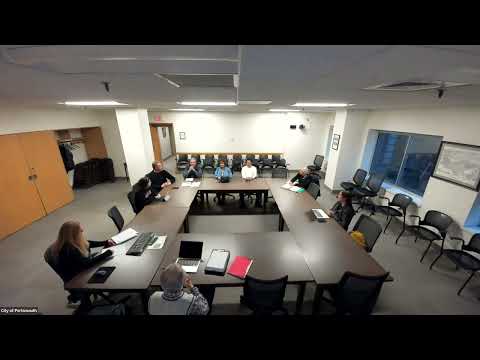
The Portsmouth Sustainability Committee compiled a working list of 2026 priorities that members said will guide the committee's work for the year, ranging from waste reduction to coastal resilience and capital project tracking.
Top items discussed included a zero‑waste plan (pay‑per‑bag, curbside composting and reuse centers), a month‑long Carfree Challenge to encourage mode shift, advocacy for a coastal resilience incentive overlay, a composting pilot for city buildings and systematic tracking of several CIP items such as multimodal public transit, electrification of the city fleet and a feasibility study for solar on city properties. The committee also noted that a UNH fellow, Ella Bloomfield Brown, has been hired to assist with the greenhouse gas inventory and that members expect a feasibility report next month on a proposed Jones Avenue landfill solar array.
Effie, a committee member, outlined elements of a zero‑waste plan and described a pay‑per‑bag system used elsewhere: "So instead of just putting your trash out ... you buy bags from the city ... They're purple bags," she said, noting that any local design would need public education and phased implementation. Effie also warned that residents who already pay for trash via property tax would need to be educated on the incentive structure.
Members discussed ownership and scope: each priority should have a named owner and an end‑of‑year goal, and small working groups could advance discrete tasks such as grant applications, public outreach or plan drafting. The committee flagged several potential funding sources (USDA/ILSR composting grants were suggested for the compost pilot) and partners (Public Works, the city planning department, Coast bus, schools and local nonprofits).
Health department staff Kristen gave an update on the "Skip the Stuff" restaurant initiative, reporting: "We only have 17 currently listed," and urged more community engagement so restaurants hear demand from customers as well as regulators.
The group also confirmed a city sustainability fair on April 10 at the Connie Bean Center (4:30–7:00 p.m.), with about 20–25 exhibitors and participating partners including Coast and regional nonprofits. The CAP action tracking dashboard remains in development; Kate will work with GIS and an intern on a simpler visual dashboard and will change the committee page reference from Bright Action to Project Drawdown's Explorer tool.
Next steps: members assigned tentative owners for several priorities, asked staff to identify grant opportunities and data, and agreed to bring fleshed‑out proposals back to the committee in coming meetings for prioritization and possible inclusion in the next CIP cycle.