Get Full Government Meeting Transcripts, Videos, & Alerts Forever!
Get email alerts on the Property Tax Reform topic
No spam. Unsubscribe anytime.
DeSantis frames special session around $250,000 homestead exemption, trust fund to aid local governments
Summary
Gov. DeSantis opened a special legislative session on property taxes and proposed a phased plan centered on a $250,000 homestead exemption, a state trust fund to offset local revenue losses and limits on local assessment growth; he urged the Legislature to put a ballot measure before voters.
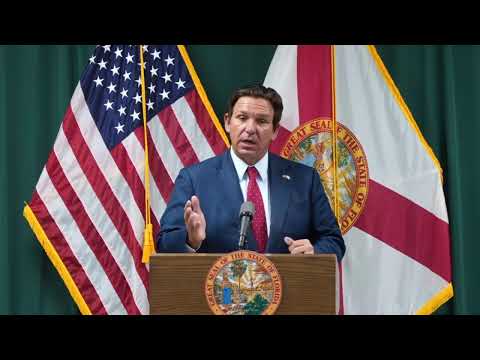
TALLAHASSEE — Gov. DeSantis onstage announced the start of a special legislative session on property taxes and presented a plan that would raise the homestead exemption by $250,000, create a state trust fund to help fiscally constrained counties and implement new limits on local tax growth.
"We are today the legislature starting a special session on property taxes," DeSantis said, framing the proposal as relief for "millions of people in this state" who face higher monthly housing costs. He described the $250,000 exemption as the "opening salvo" in a phased approach that would, if enacted, make that portion of a homesteaded home's assessed value tax-free.
The proposal, DeSantis said, would be coupled with a large trust fund financed from existing state surpluses and rainy-day reserves to provide grants to counties that would otherwise lose a substantial portion of property tax revenue. He told listeners the state has seen strong revenue growth since 2019 and argued those gains mean the state can help fund the transition without gutting essential services.
Why it matters: DeSantis and allies say a sizable homestead exemption is the most direct way to put thousands of dollars back into many homeowners' pockets each year, easing cost-of-living pressures. Opponents — including some local officials in other venues — have warned that reducing local property-tax revenue could force cuts to services such as public safety and schools unless state aid is sufficient.
Details offered by the governor included county-level examples of the measure's reach: DeSantis said the exemption would remove a substantial portion of homesteaded properties from local tax rolls in counties he cited, including large percentages in Broward, Hillsborough and Pasco counties. He also characterized homestead revenue as roughly 30% of local property-tax collections statewide and said total property-tax receipts had grown sharply since 2019 (he cited figures of about $32 billion in 2019 and about $60 billion at present).
DeSantis said the plan would include protections for the business tax base, including a reduction in the annual cap on assessment increases (he described changing a 10% limit to a 5% limit), and a proposed "taxpayer bill of rights" mechanism to hold spending growth to population plus inflation except for narrowly allowed increases such as teacher pay and public safety.
A key component of the pitch was a state-operated trust fund. DeSantis said the state's rainy-day reserves and surpluses could be used to smooth the transition for counties with smaller tax bases, and that the Legislature had already set aside amounts that could be redirected to this purpose.
Public-safety official endorses the plan: A county sheriff who stepped to the podium praised the governor, linking financial stress in households to a range of social harms and urging government to seek efficiencies. "When there's stress in the household, it leads to issues," the sheriff said, arguing the proposal would help families struggling with mortgages, car payments and daily expenses.
Questions from local officials covered how the proposal would affect large local projects. The governor said mixed-use development and stadium projects could expand the commercial tax base and thereby help local revenue under his proposal, because commercial and non-homestead properties would still be taxable.
On education funding, DeSantis said the state already shoulders a growing share of K-12 costs and proposed the trust fund could be used to help school districts with transition costs. He also signaled interest in broader school-finance changes and a possible tax commission to examine structural reform for any ballot measures appearing in 2028.
What comes next: DeSantis said the Legislature was in session this week and that lawmakers should prepare language to place a measure before voters. No formal draft bill or ballot language was recorded in the remarks, and no formal votes took place during the event.
Attribution and sources: Quotes and specific county and statewide revenue figures in this report are drawn from DeSantis' public remarks during the announcement and from a supporting statement by a local sheriff; numbers and legal or fiscal characterizations are attributed in the text to the governor.