Get Full Government Meeting Transcripts, Videos, & Alerts Forever!
Get email alerts on the Water Lead Replacement topic
No spam. Unsubscribe anytime.
Peru outlines $29 million multi‑phase plan to replace lead service lines; utilities urge homeowner cooperation
Summary
Peru utilities and water management staff described a multi‑phase lead service line replacement program funded by SRF 0% loans and grants, estimated at about $29 million. Officials said homeowners will not be charged directly but must sign right‑of‑entry forms for free replacement work.
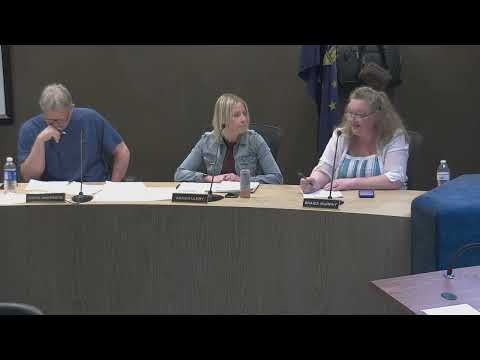
Peru utilities staff on Tuesday presented a multi‑phase plan to replace the city’s lead service lines, laying out funding, timelines and homeowner requirements. Utilities Director Josh Chance told the council the project combines low‑interest State Revolving Fund (SRF) loans and grants and that homeowners in affected areas will not pay the out‑of‑pocket replacement costs directly.
The program stems from the EPA’s 2024 update to the Lead and Copper Rule, which lowered the action level for lead in drinking water and requires full service‑line replacement within a ten‑year compliance window. Chance said the city’s initial engineering estimate for the full citywide program — through multiple phases — is roughly $29 million and that the city pursued all available grants and 0% loans to reduce homeowner burden.
"It costs our ratepayers, but it doesn't cost the individual homeowner the $3 to $5,000 it would cost to replace those lines," Chance said, describing how the city packaged grant and SRF financing to cover construction costs.
Project manager Jamon Bicycle (superintendent, Division of Water Management) reviewed progress in phase one: crews have completed potholing to verify which services are lead or galvanized and are replacing utility‑side lines where CCTV and excavation confirmed lead. Bicycle described outreach to property owners: "We are 300 homeowners shy of getting responses back," he said, and staff plan mailers, door knocks and extended office hours to collect right‑of‑entry forms so on‑site replacements can be scheduled.
Bicycle and Chance emphasized that the federal rule requires full replacement from the main to the building service line: partial replacements do not meet the compliance standard. Bicycle also explained operational impacts for residents during construction: water service will be turned off for a limited time on construction day (roughly eight hours), and crews will provide flushing guidance and temporary pitcher filters after disturbance.
Councilmembers asked about warranty and post‑work testing. Bicycle said the contractor warranty is one year and the city will offer free lead testing to customers whose lines have been replaced. Staff reiterated flushing protocols — 10 minutes is the city’s standard recommendation — and urged residents to follow posted instructions when testing is requested.
Next steps: staff will continue outreach to unresponsive property owners in phase one, begin potholing in phase two in late July/early August, and return to the council with status updates. The utilities office also posted a QR code and an online right‑of‑entry form for residents to submit authorization quickly.
The presentation emphasized compliance timelines tied to the Lead and Copper Rule and warned that properties not completed by compliance deadlines may be subject to fines or loss of service. Officials encouraged homeowners to sign right‑of‑entry forms so replacements can proceed without delay.