Get Full Government Meeting Transcripts, Videos, & Alerts Forever!
Get email alerts on the Drone Program topic
No spam. Unsubscribe anytime.
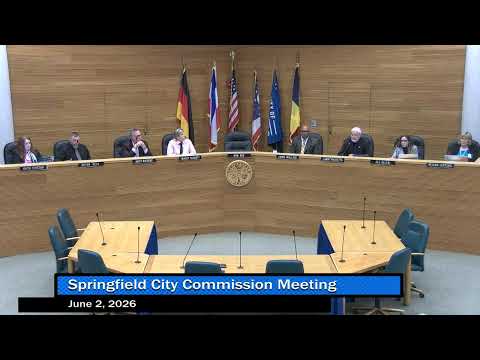
Springfield approves drone-as-a-first-responder pilot, cites faster response and public flight transparency
Summary
The City Commission unanimously authorized a two-year Motorola contract to field a drone-as-a-first-responder pilot integrated with Cal/Kalen Analytics; presenters said drones can reach scenes in under a minute, while residents raised privacy and environmental concerns during public comment.
The Springfield City Commission voted unanimously to authorize a two-year agreement with Motorola Solutions to implement a drone-as-a-first-responder (DFR) pilot, with an initial contract amount not to exceed $239,996 and a planned integration with an analytics provider at no cost to the city.
Tom Franen, the city’s assistant city manager and economic development director, opened the work-session presentation by describing prior approvals that enabled the pilot, including state support and a vendor selection process. Rich Fox, director of the Ohio Department of Transportation’s UAS center, said the statewide pilot funded by the Ohio legislature aims to “elevate the capabilities of our first responders” and stressed the time-sensitive nature of some responses: “Seconds count,” he said.
Assistant Chief Brian Leeski described Springfield’s existing drone program and training: the city currently operates eight handheld drones and employs 18 FAA Part 107–certified pilots. Presenters showed video examples in which thermal-equipped drones helped locate an armed suspect, assisted firefighting crews by identifying heat sources, and located a missing person within about 10 minutes. Staff said a permanently housed DFR system (a heated, weather-protected “drone in a box”) can launch on demand and reach many scenes within roughly 45 seconds to a little over a minute, depending on distance and conditions.
City staff and police/fire presenters explained the procurement process (vendor day, RFP, vendor interviews) and said the selected equipment will include thermal imaging, obstacle avoidance, two-way communications, emergency lighting, a parachute for malfunctions and an approximate 42-minute flight endurance that varies with weather. The presenters noted the system will integrate with the department’s Motorola CAD and can stream video to responding vehicles’ iPads.
Officials addressed civil-liberties and misuse concerns directly: presenters stated the DFR units will not be used for routine patrol or continuous surveillance, they will not carry facial-recognition software, and each flight will generate a report that can be published on a public transparency portal. Video from flights will be stored under the same records rules that govern in-car and body-worn cameras and will be subject to public-records requests and periodic audits.
Several residents during the public-comment period raised privacy and cybersecurity concerns. One resident warned the commission to “step back” on vendor choices and said the system could create unanticipated risks if linked data were misused. Another commenter alleged that private data platforms could exert outsized control over municipal systems.
The commission approved the Motorola agreement by roll-call vote, with Commissioners Ricketts, Riggsby, Tacket (assistant mayor) and Wallace voting “Yes.” Staff said the pilot will include a test window during which some integrations (for example, with the county dispatch CAD) will be performed manually and refined over time. The city will also deploy two Brink responders (the model shown in the presentation) at City Hall and at Station 8 as part of the grant-funded rollout.
Next steps: staff will finalize contract details, proceed with procurement and training, implement the transparency reporting portal for flight logs, and coordinate with the county dispatch center on CAD integration during the pilot period.