Get Full Government Meeting Transcripts, Videos, & Alerts Forever!
Get email alerts on the Public Safety topic
No spam. Unsubscribe anytime.
Resident urges Covington to keep Flock Safety license‑plate readers, cites Austin case
Summary
A longtime Covington resident urged the council to retain Flock Safety automated license‑plate readers, arguing such systems aided a nearby city in quickly locating suspects during a multi‑site crime spree and warning that removals can hinder investigations; the council heard the comment during public comment but took no action.
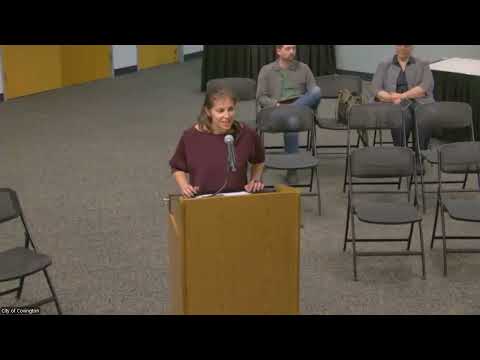
David Codle, identifying himself as a Covington resident of 30 years, urged the City Council to continue using Flock Safety automated license‑plate readers (ALPR) during the meeting's public comment period on May 26.
Codle referenced recent developments in other jurisdictions and said that when Austin chose not to renew a Flock contract in 2024 amid privacy concerns, law enforcement later struggled to track suspects in a multi‑site shooting and theft spree; by contrast, he said a smaller nearby city with an active Flock ALPR network located the suspects quickly. "What Mayor has is an active license plate recognition network and the community support to keep it running," he read from Flock's statement during his remarks and urged Covington to retain the system.
He described Flock policy features intended to limit data sharing (default sharing set to off in jurisdictions where state law prohibits it), standardized incident‑based reporting for searches, and audit logs to monitor access. Codle also noted that jurisdictions across Washington have canceled Flock systems amid privacy debates and urged the council to weigh public‑safety benefits and civil‑liberties concerns.
What the council did: The comment was heard during public comment; council did not take action on ALPR procurement or policy at the May 26 meeting.
Context and limits: Codle framed the issue as a tradeoff between privacy concerns and law‑enforcement capability and urged the council to consider the evidence he described. Council members did not debate the substance of the claim in this meeting; no staff presentation or policy motion on ALPR was made that night.