Get Full Government Meeting Transcripts, Videos, & Alerts Forever!
Get email alerts on the Sewer Infrastructure topic
No spam. Unsubscribe anytime.
Lower Macungie planners review regional Act 537 sewer plan to curb inflow and infiltration
Summary
CKS Engineers, Lehigh County Authority and Lower Macungie staff briefed the commission on a regional PA Act 537 plan focused on reducing inflow and infiltration over five years, emphasizing municipal sewer rehab, metering to secure DEP flow credits, and a five‑year municipal rehab projection of about $60 million across the region.
Lower Macungie Township planning commissioners on May 13 heard a regional presentation on the Pennsylvania Act 537 plan aimed at reducing extraneous inflow and infiltration into the Klein’s Island sewer system, a regionwide effort led by the Lehigh County Authority and CKS Engineers.
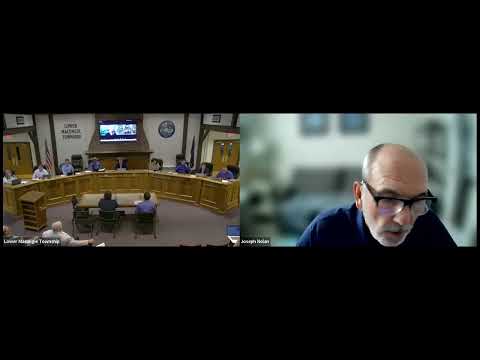
Joseph (Joe) Nolan of CKS Engineers told the commission the draft plan, submitted to member municipalities on April 16, responds to excessive flows that produced bypasses and reporting violations in 2018–2019 and is designed to reduce clear water entering sanitary sewers over the next five years. "The purpose of this Act 537 plan you have before you is to reduce extraneous flows in the system and avoid spending hundreds of millions of dollars on treatment and interceptor upgrades later," Nolan said.
The plan relies on municipal source‑reduction programs and targeted sewer rehabilitation. Lisel Gross, CEO of Lehigh County Authority, said the Klein’s Island system serves about 270,000 people and treats roughly 32 million gallons per day across about 1,000 miles of pipe. After considering many alternatives over five years, the region narrowed work to a five‑year package focused on municipal sewer rehabilitation and limited plant upgrades: roughly $60 million across the 15 municipalities in the five‑year plan, with a larger 10‑year investment estimated at about $300 million.
Zach Graves, Lower Macungie’s water resources specialist, summarized the township’s commitments and metrics: the township expects to budget about $1–$2 million per year for the next 10 years (approximately $10–$20 million total), and estimates roughly 2,000–4,000 private laterals remain to be addressed at an approximate cost of $5,000 per lateral. Graves also said recent township land acquisitions have already reduced projected 10‑year flows by more than 50,000 gallons per day.
Commissioners pressed presenters on prioritization, cost sharing and measurement. Gross said municipalities will fund their own projects (municipal rehab dollars will be weighted toward areas showing more leakage on the authority’s heat map), and the authority will report post‑rehab metering results to the Pennsylvania Department of Environmental Protection to document reduced flows and pursue potential "flow credits." Presenters said the authority expects to provide data on a schedule to be set with DEP, possibly quarterly.
The presenters described the technical work behind the plan: extensive flow monitoring, calibrated hydraulic modeling, and targeted repairs such as cured‑in‑place lining of clay pipe, manhole repair and selective private lateral repairs. Presenters noted they use night‑time metering and other techniques to isolate clear‑water leakage and to attribute flow reductions to specific projects.
A resident asked whether sewage leaks out into groundwater; Nolan answered that, for most of the system, lines are under hydrostatic pressure and flow tends to move into the sewer rather than out of it. On stormwater, presenters said local stormwater controls and the scale of the reductions mean eliminating stormwater from the sewer system should not create significant new stormwater problems for the township.
Commission members requested a simple, public scorecard showing progress (for example, gallons of leakage removed year‑to‑date). Presenters agreed this is feasible and valuable for public outreach. Staff reminded the planning commission that municipalities have 60 days to provide written comments (including a statement of "no comments") during the review period.
Next steps: the authority expects to finalize responses to municipal comments, seek township adoption by resolution in late summer, and submit the regional Act 537 package to DEP in October. The planning commission did not take a formal vote on the plan on May 13; members were invited to submit written comments during the review period.