Get Full Government Meeting Transcripts, Videos, & Alerts Forever!
Get email alerts on the Solar Development topic
No spam. Unsubscribe anytime.
Commissioners approve two-week closure for Crossline Solar borings amid strong resident concern
Summary
Dubois County commissioners voted to let AES’s Crossline Solar temporarily close County Road 500 West for two weeks to complete borings, siding with highway staff that a full closure is the safer option for work zones despite repeated resident warnings about safety, trespass and road damage.
The Dubois County Commissioners voted to allow AES’s Crossline Solar project to temporarily close County Road 500 West between 750 South and 900 South for up to two weeks so contractor crews can complete borings and road crossings.
Levi Liard, the county highway engineer, outlined two options for the work: maintain single-lane alternating traffic through the work zone or allow a full closure with a signed detour via U.S. 231. Liard told the board a full closure is generally safer for construction workers because “maintaining traffic through the work zone is the increased exposure between the traveling public and construction operations,” while noting a full closure would inconvenience motorists and local property access must be preserved for emergency responders.
After brief discussion and interruptions from the gallery during the meeting, a commissioner moved to permit the two-week closure; another seconded the motion. The board voted by voice and the motion carried.
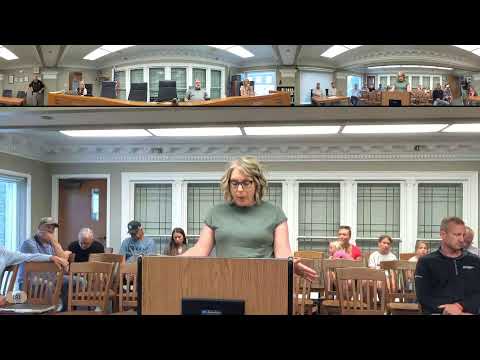
Residents who spoke during an extended public-comment period urged the board to reconsider allowing the closure and to take a broader look at the Crossline project’s permits and impacts. Jason High, a Cass Township resident, told commissioners that “allowing the private company to work in the rightway is basically what is causing this dangerous situation,” and Amanda Harris, another nearby resident, said she has “been almost hit head-on multiple times” by contractor vehicles using county roads during project activity.
Other residents cited repeated trespassing onto private driveways, several instances of property damage, and instances where contractors passed stopped school buses. Some asked the county to require the company to use alternate access on participating landowners’ property instead of county roads, and others urged the board to re-examine permits and the project’s compliance with local requirements.
Commissioners said they would require appropriate detour signage, maintain at least one point of access for residents and emergency services, and expect the company and its subcontractors to follow any conditions set by the county. The highway engineer noted bridge and lane restrictions on regional routes had been checked before approving the detour route. The county did not record a roll-call tally in the transcript; the clerk announced the motion carried.
Next steps: AES is expected to install signed detours and traffic control as agreed; county staff will verify signage, emergency access provisions and any required permit conditions before and during the closure.