Get Full Government Meeting Transcripts, Videos, & Alerts Forever!
Get email alerts on the School Budget Healthcare topic
No spam. Unsubscribe anytime.
Portsmouth leaders outline cuts and reserve use to absorb $1.57 million SchoolCare assessment
Summary
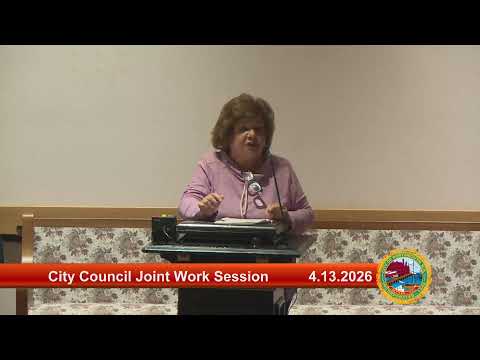
At a joint work session April 13, city and school officials said they will use one-time savings, a portion of the health stabilization fund and nearly $1 million in school-department reductions to cover a $1.57 million SchoolCare assessment while preserving employee healthcare and avoiding immediate teacher layoffs.
Portsmouth leaders on April 13 told the city council and public they can cover a $1.57 million SchoolCare assessment without a supplemental city appropriation by combining school-department savings, departmental underspending and a modest draw on the city's health stabilization reserve.
The board chair of the Portsmouth School Board and the superintendent characterized the cost as an extraordinary, one-time invoice layered on top of a 26.2% premium increase the district has already budgeted. Nathan, the deputy city manager for finance and administration, said the stabilization fund carried roughly $7 million at June 30, 2025; city policy limits draws to about 25% of the corpus in a given cycle (about $1.75 million). Staff project a FY26 draw of roughly $1.5 million and said up to $250,000 of the stabilization fund could be applied to the SchoolCare assessment under current policy.
Why it matters: the combination of the assessment and steep premium increases has forced officials to find nearly $1.4 million in FY26 savings across the city and schools to avoid asking taxpayers for an emergency appropriation this year and to protect employees' health coverage.
City and school staff said the offsets will be a mix of actions already taken in the school board's February proposal and additional one-time reductions identified for the current fiscal year. The superintendent said the school board's February budget work reduced the continuing-services baseline by about $1.1 million (roughly 4.5 full-time equivalents) before the assessment. School department leaders then identified roughly $418,000 in FY26 savings (reduced course-reimbursement payouts, lower out-of-district tuition after reconciliations, prorated IT contributions, eliminated consulting and smaller operational lines). The city staff reported finding additional departmental underspending and debt-service timing savings that staff believe can close most of the remaining gap.
"This is going to be incredibly hard," the School Board Chair said, noting officials are now discussing choices that affect people and services rather than just deferred maintenance or supplies. "We're not cutting teachers and we are doing our best to make sure that everybody gets what they need. But these are not going to be easy changes." (School Board Chair)
Nathan outlined the stabilization-fund math: "The fund had roughly $7 million at the end of FY25. If we don't want to use more than 25% of the corpus in a cycle, that means about $1.75 million is the cap—our estimate is we'll draw about $1.5 million this year, so up to $250,000 could be applied to the SchoolCare assessment." (Nathan, deputy city manager for finance and administration)
Officials emphasized the $1.57 million assessment is a one-time invoice separate from the district's ongoing premium increase. "The assessment is a separate invoice that we're looking at right now," a city staff member said. "It does not accrue to the base; the 26.2% rate increase remains part of next year's ongoing budget pressures." (City Manager)
Councilors pressed staff on whether these uses of reserves would reduce the city's ability to apply fund balance to future tax-rate relief. City staff said revenues and departmental underspending this year should mitigate impacts on the unassigned fund balance, and the plan is to manage the stabilization fund over multiple years rather than exhaust it in a single cycle.
The meeting produced no formal vote; the school board is scheduled to consider its revised recommendation the following night.
What comes next: the school board will take its updated recommendation to the council at its next meeting, and staff said they will continue working to refine FY26 savings and a multi-year plan to rebuild the stabilization reserve while budgeting for the larger premium increases expected in FY27.