Get Full Government Meeting Transcripts, Videos, & Alerts Forever!
Get email alerts on the Soil Health topic
No spam. Unsubscribe anytime.
Farmer Micaa Sher details 19‑species cover‑crop mix, no‑till and 'bio strips' on Renville podcast
Summary
On the Armored Soil Podcast produced by Renville SWCD, farmer Micaa Sher described using a 19‑species cover‑crop mix, near‑no‑till practices and 'bio strips' to boost soil biology and improve infiltration, and discussed testing limits and practical lessons for other growers.
On the Armored Soil Podcast produced by Renville Soil & Water Conservation District, local farmer Micaa Sher described a large, multi‑species approach to cover crops and how it fits with a near no‑till system.
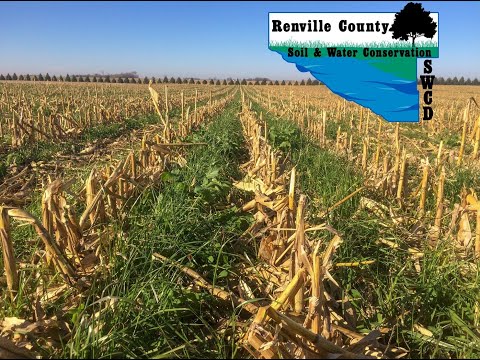
Sher said the operation has been diversifying for years and that “this mix for this year has 19 things,” explaining the goal is to feed different soil biological groups with a varied plant 'diet.' The mix, Sher said, includes flax, buckwheat, vicia, sunflower, safflower, okra, sugar beets, sesame, lentils, chickpeas, cowpeas, faba beans, fenugreek, radish, kale, cabbage, turnip, oats and a sorghum‑type (referred to in the conversation as 'piper'), with oats the main grass component.
Why it matters: Sher framed the practice as a soil‑health strategy that mimics diverse natural landscapes and helps maintain living roots in the ground as often as possible. Sher also described complementary practices — moving from strip‑till to predominantly no‑till, retaining high residue (roughly 80% most years), occasional applications of manure or litter, and biological amendments — all intended to support microbial life and improve field trafficability in wet springs.
Sher and the host described several practical results and limits. Sher told a cautionary story about a grower who seeded excessive oats after peas and created a heavy residue mat that caused spring wet‑area problems, noting that careful rate selection matters. On measured outcomes, Sher said visual and operational differences are clear: fields managed for soil health have been easier to plant in wet seasons and a trail‑camera time‑lapse noted by the host showed a stark difference in ponding between a conservation‑managed field and an adjacent conventional field. Sher characterized that evidence as local, observational, and useful for demonstrating effect, but not as a controlled experiment.
On measurement and testing, Sher said standard organic‑matter percentages are not the sole metric they now focus on and that they are exploring labile‑carbon testing (PX‑C) as a better indicator of microbially available carbon and biological activity. Sher noted the cost of detailed nutritional testing for grain remains prohibitive for most small operations.
Practical tips Sher offered for growers: start with annual species for cover crops, set a budget for trials, run many small trials and vary seeding rates rather than applying blanket high rates. “Set your dollar amount and try as many as possible,” Sher advised.
The episode concluded with the host thanking Sher for sharing on‑farm experience and the practical takeaways for other farmers considering increased cover‑crop diversity and reduced tillage.