Get Full Government Meeting Transcripts, Videos, & Alerts Forever!
Get email alerts on the Subdivision Tripod View topic
No spam. Unsubscribe anytime.
High Valley subdivision appeal paused after residents and hydrologist flag water and road concerns
Summary
Valley County commissioners tabled the appeal of subdivision 25-018 (Tripod View) to June 15 after local residents expressed worries about well yields, road safety and services and a hydrogeologist testified that local wells are in fractured granite with low yields and uncertain connectivity.
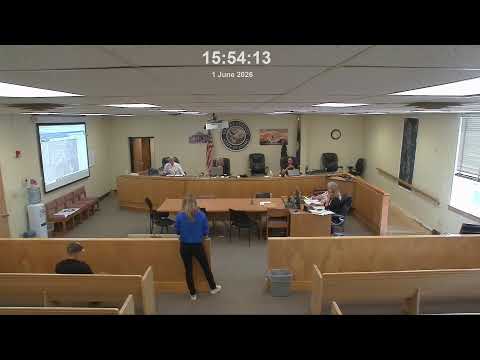
Valley County commissioners on June 1 declined to decide the appeal of subdivision 25-018, known as Tripod View, and instead tabled the item to June 15 after hearing public testimony and a technical presentation.
Residents who live in and around High Valley told the board they oppose the subdivision for multiple reasons: roadway safety on High Valley Road and Drybuck, limited mail and trash services, possible strain on already low-yield wells, and impacts to wildlife and local character. "It's a genuine safety concern," Amber Summers told the board, describing heavy traffic and narrow, washboarded sections where impatience and trailers increase accident risk.
Kenneth Neely, a hydrogeologist with Idaho Water Engineering LLC, presented an analysis of local well logs and aquifer conditions. Neely said the bedrock is fractured granite, that wells in the immediate area are low-yield (he cited examples of roughly a half gallon to one gallon per minute for some wells), and that ‘‘there are no dry holes in the area’’ in the historical well record. However, he cautioned that fracture systems are unpredictable and that whether new wells would hydraulically interfere with existing wells cannot be determined without targeted pump/monitor tests.
Attorney Brian Sheets, who appeared for parties opposing the subdivision, told commissioners the applicants' water analysis did not model worst-case full-time occupancy, omitted irrigation demand assumptions and relied on limited sampling (three days/week), and therefore understates potential demand. He also raised questions about the record regarding road and drainage conversations that were not formally documented.
Given the number of speakers delayed by a road closure and the technical questions still outstanding, commissioners moved and seconded to table the appeal to June 15 at 1 p.m. and to accept additional testimony from anyone who could not speak because of the closure. The chair noted the board's limited land-use authority (land use only) and expressed condolences for victims of the accident that closed the road.
The hydrologist's presentation is in the public record and county staff advised collecting additional well-driller data and, if necessary, conducting pump/monitor tests to evaluate potential interference before final approval of the subdivision.
Next steps: the item will return to the board on June 15, at which time commissioners said they will consider additional testimony and staff follow-up on water, roads and infrastructure.