Get Full Government Meeting Transcripts, Videos, & Alerts Forever!
Get email alerts on the Environment Health topic
No spam. Unsubscribe anytime.
Residents urge council to restrict nonessential park pesticides, citing precautionary principle
Summary
Public commenters urged the Decorah City Council to restrict nonessential herbicides and pesticides on parks and playing fields, invoking the precautionary principle and pointing to bans elsewhere and lower-risk alternatives.
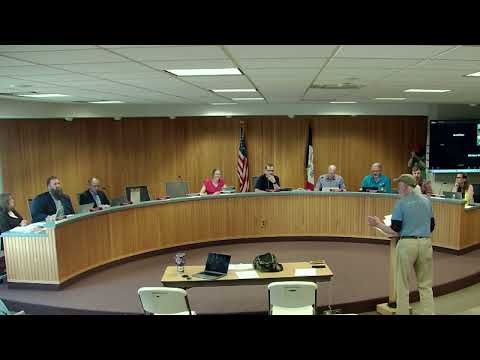
Brigitte Amita, introduced by the council as the first public commenter, told the council she was “not a city resident” but a rural Wenatchee County resident who uses Decorah parks and watched children exposed to spraying. She urged the council to apply the precautionary principle and restrict nonessential turf pesticides on playing fields and other public spaces rather than wait for definitive proof of individual harm.
Amita said the precautionary principle “puts the burden of proof with you, the decision makers” and asked council members to enact policies removing “neurotoxins and hormone hijackers preemptively to limit the overall toxic load on the environment and the public, especially to children.”
Steve McCarter, who followed during public comment, outlined how other jurisdictions have used precautionary rules. He described Ontario’s cosmetic pesticide ban and said it prohibits use and sale of many products for aesthetic purposes, and he urged the council to consider similar targeted limits and to adopt lower-risk alternatives such as corn gluten meal or iron-based herbicides.
City staff and councilmembers framed the issue as one for the sustainability commission to research. The mayor asked the sustainability commission to do due diligence to determine whether the city should develop a policy restricting park pesticide use and, if so, what scope and exemptions would be appropriate. Staff said recent applications in Decorah were “targeted” and that press materials and signage would specify treated areas and any temporary safe-entry periods.
The council did not take formal action on pesticide rules at this meeting; staff was asked to bring research and potential policy options back to the council after the sustainability commission’s review.
The public comment and subsequent council request for study leave open whether the city will pursue an outright ban, a targeted restriction, or a set of exemptions for public health and invasive species control.